
The Yungang Grottoes, a World Cultural Heritage site enduring over 1,500 years of weathering, has finally acquired a "smart nervous system" capable of "sensing" its own health—China's first monitoring and intelligent regulation system for condensation water inside grottoes was recently completed and passed acceptance inspection at the Yungang Grottoes in Shanxi Province. This marks the first breakthrough in solving the global challenge of "invisible, unmeasurable, and untreatable" condensation water within rock masses.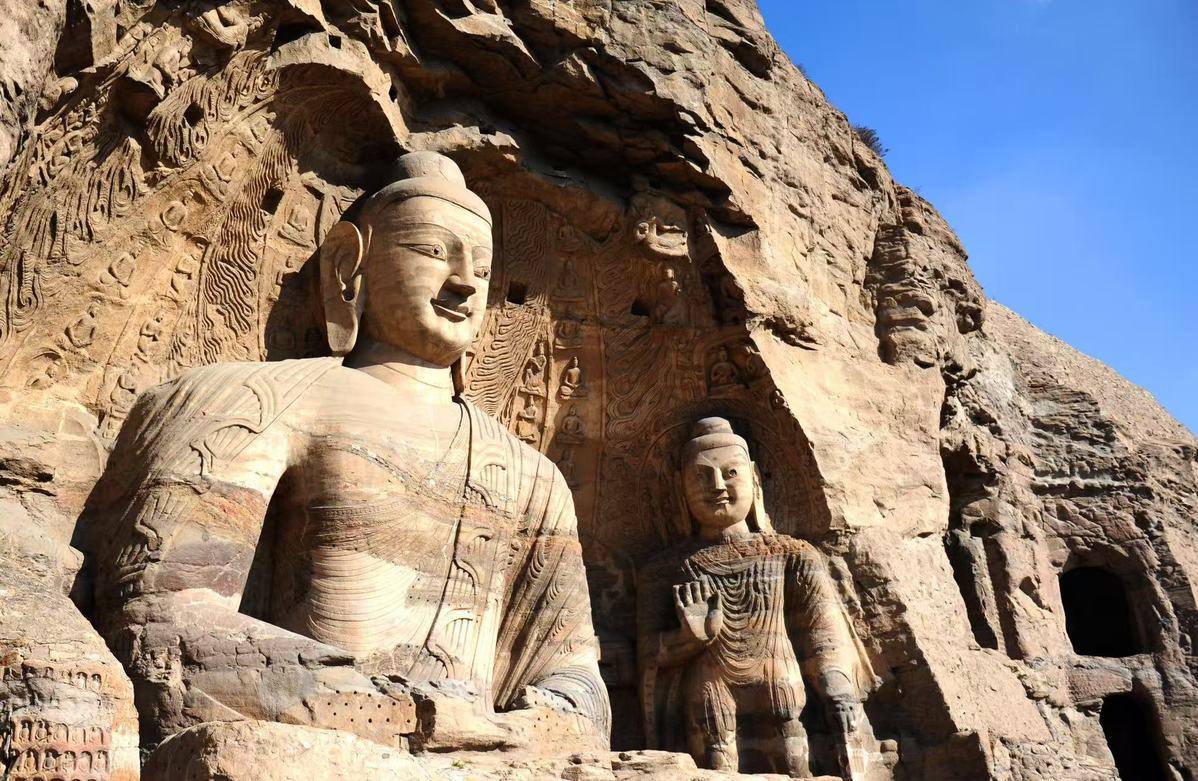
Condensation Water—The "Invisible Killer" of Grotto Cultural Relics
The Yungang Grottoes were excavated within a sandstone mountain. For over 1,500 years, water damage has been the primary threat to the grottoes' safety. Among water-related issues, condensation water is particularly insidious and highly destructive—when temperature and humidity within the caves reach certain conditions, moisture in the air condenses into liquid water on the cave walls and within rock pores. This condensation repeatedly wets the rock surface, dissolves mineral salts, accelerates sandstone weathering, efflorescence, and spalling, causing irreversible damage to stone cultural relics.
For a long time, the cultural heritage sector could only monitor and treat condensation water on rock surfaces, lacking effective methods to address the "invisible threat" of condensation water inside rock masses. How to accurately "see" the moisture state within rock masses and achieve intelligent regulation has been a common challenge in global grotto conservation.
Three Core Technological Breakthroughs Achieve "Clear Visibility, Accurate Measurement, and Effective Treatment"
On July 23, 2026, the Shanxi Provincial Science and Technology Major Special Plan "Open Competition Mechanism" project, "Key Technologies for Monitoring and Treating Internal Condensation Water in Stone Cultural Relics at Yungang Grottoes," supported by the Shanxi Provincial Department of Science and Technology and organized by the Shanxi Provincial Cultural Heritage Bureau, officially passed acceptance inspection at the Yungang Research Institute. With a total funding of 7.41 million yuan, it is one of the largest scientific research investments in the field of cultural heritage in Shanxi Province.
Led by Shanghai University and relying on the Yungang Research Institute, the project was jointly implemented with China University of Geosciences (Beijing) and Beijing Yuanzhen Online Monitoring Technology Co., Ltd. After three years of collaborative research, the team achieved the first breakthrough in solving the technical challenges of "invisible, unmeasurable, and untreatable" internal condensation water.
Breakthrough 1: Clear Visibility—AI Non-Destructive Testing Enables "X-ray Vision" of Rock Masses Without Drilling
The team pioneered an AI-based non-destructive testing technology that can quantitatively identify sandstone pore structure and mineral composition without sampling or drilling, precisely determining the depth at which condensation water forms within the rock mass.
This technology fills a gap in China, achieving "non-invasive imaging" of the moisture state inside rock masses—like performing a "CT scan" on the grottoes, accurately understanding the distribution and movement patterns of condensation water without damaging the cultural relics.
Breakthrough 2: Accurate Measurement—Comprehensive Microenvironment Monitoring System Reduces Monitoring Points by 80%
The team built China's first minimally invasive comprehensive microenvironment monitoring system for large-scale grottoes. While ensuring the safety of cultural relics and unaffected visitor access, the number of monitoring points was reduced by over 80% compared to traditional solutions.
The system has collected 46.67 million environmental data records, achieving all-factor, all-weather monitoring of cave temperature, humidity, airflow, and rock structure. Additionally, the team established a high-precision simulation platform, with temperature and humidity prediction accuracy significantly exceeding industry standards, enabling early warning of hidden condensation water inside rock masses.
Breakthrough 3: Effective Treatment—"3+1 Level" Adaptive Intelligent Regulation System
The team innovatively constructed a "3+1 level" adaptive intelligent regulation system integrating natural ventilation, forced ventilation, dehumidification control, and graphene temperature control. This system automatically assesses condensation water risk levels based on real-time monitoring data and dynamically matches the optimal treatment strategy—from natural ventilation to forced ventilation, then to active dehumidification and precise graphene temperature control—forming a multi-level, adaptive regulation closed loop.
The system has been demonstrated in Caves 9 and 10 of the Yungang Grottoes, achieving significant results in condensation water treatment and exceeding the project's performance targets.
Paradigm Shift from "Experience-Based Judgment" to "Data-Driven" Approach
The project not only focuses on technological development but also emphasizes fundamental research—by studying the interactive coupling mechanisms of cave temperature, humidity, airflow, and rock structure, combined with analysis of sandstone pore structure and mineral composition, it elucidates the formation mechanism of condensation water and its destructive effects on stone cultural relics.
This complete technical chain of "mechanism research—monitoring and sensing—intelligent decision-making—precise regulation" marks a shift in grotto conservation from the traditional model relying on expert experience to a new, data-driven intelligent phase. The project acceptance expert panel stated that the project "achieves key technological breakthroughs for major challenges in grotto conservation, holding significant importance for promoting scientific and technological innovation in cultural heritage and advancing the construction of Yungang Studies."
Starting from Yungang, Protecting More Millennia-Old Civilizations
A "Replicable Solution" for China's Cave Temples
China has 2,155 cave temples and 3,831 cliffside carvings distributed across the country. The vast majority of these grottoes face varying degrees of water damage threats. The condensation water monitoring and intelligent regulation system at Yungang Grottoes has formed a replicable and scalable comprehensive technical solution for treating condensation water in grottoes.
The project team stated that the next step is to continue promoting the transformation and application of research results, extending this technical solution to other large-scale cave temples and similar types of cultural relics. From the Mogao Caves in Dunhuang to the Dazu Rock Carvings, from the Longmen Grottoes to the Maijishan Grottoes—this "Yungang Solution" is expected to become a standardized technical template for grotto conservation in China.
Upgrading the Technical Paradigm for Stone Cultural Relic Protection
The significance of this technology extends beyond condensation water treatment. Core technologies such as AI non-destructive testing, comprehensive microenvironment monitoring, and adaptive intelligent regulation can be transferred to multiple fields of stone cultural relic protection, including weathering prevention, rock stability assessment, and mural disease monitoring, promoting a comprehensive upgrade of China's stone cultural relic protection from "rescue conservation" to "preventive conservation."
A Demonstration Model for "Technology + Cultural Heritage" Integrated Innovation
This project is a landmark initiative in implementing the scientific protection of the Yungang Grottoes and advancing the construction of Yungang Studies. It demonstrates the effectiveness of interdisciplinary and inter-institutional collaborative research—cultural heritage management units (Yungang Research Institute), universities (Shanghai University, China University of Geosciences), and enterprises (Beijing Yuanzhen Online Monitoring) joining forces to make technological innovation a solid support for long-term cultural heritage preservation.
From "invisible" to "clearly visible," from "unmeasurable" to "accurately measured," from "untreatable" to "effectively treated"—the completion of the condensation water monitoring and intelligent regulation system at Yungang Grottoes has equipped the millennia-old grottoes with a "smart life support system" capable of autonomous perception and intelligent decision-making.
This is not only a breakthrough in cultural relic protection technology but also a transformation in the philosophy of cultural heritage conservation: letting technology safeguard the continuation of civilization, ensuring that the carving art from a thousand years ago, under the protection of data and algorithms, endures for another millennium.