
Recently, the 2025 National Science and Technology Award Conference was held in Beijing. China Coal Technology & Engineering Group (hereinafter referred to as CCTEG) received five national science and technology awards for its scientific and technological achievements. Among them, the "Key Technologies and Equipment for Transparent Perception and Intelligent Prevention and Control of Mine Water Disaster Hazards," led by CCTEG Xi'an Research Institute, won the second prize of the National Science and Technology Progress Award.
"This technological system has comprehensively propelled mine water disaster prevention and control into a new 'data-driven intelligence' stage, effectively resolving the development dilemma for China's tens of billions of tons of mineral resources threatened by water hazards, significantly enhancing the level of safe resource extraction under complex hydrogeological conditions, and providing crucial support for the security of national strategic mineral resources," said Dong Shuning, a first-level chief scientist at CCTEG, deputy director of the National Key Laboratory of Coal Mine Disaster Prevention and Control and director of its Water Hazard Prevention Sub-Laboratory, and director of the Science and Technology Committee of Xi'an Research Institute. He stated that, overall, this scientific and technological achievement can technically "activate" China's tens of billions of tons of coal reserves threatened by water disasters, providing technical support for national energy security.
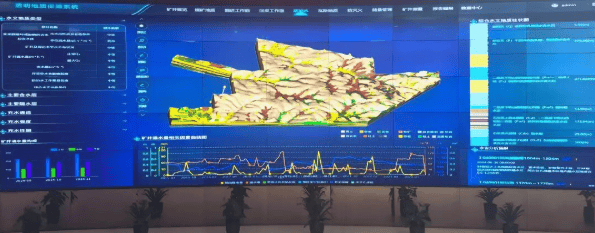
The development of this scientific and technological achievement stems from China's complex and unique mine hydrogeological conditions.
"China is the country with the most complex mine hydrogeological conditions globally. Whether for coal mines or metal and non-metal mines, the constraint of water disasters on mining operations is the most prominent worldwide, directly impacting the self-sufficiency capacity for strategic mineral resources like coal and iron ore, and threatening mineral security," Dong Shuning noted. According to statistics, over 3,600 coal mines nationwide are threatened by water disaster hazards, accounting for approximately 86%.
It is against this backdrop that the research team from CCTEG Xi'an Research Institute focused on mine water disasters, a major long-standing challenge constraining industry development, and proposed a new technical route of "intelligent water disaster prevention and control supported by geological transparency," aiming to fundamentally eliminate the dual constraints of water disaster hazards on mine safety and efficiency.
The difficulty in preventing and controlling mine water disasters lies in the fact that the causative factors are highly concealed and, influenced by mining disturbances, are time-varying, making water disaster hazards "invisible, indistinguishable, and uncontrollable."
"Our research efforts precisely target these two major difficulties," Dong Shuning explained. On the theoretical level, the research team established the theory of time-varying seepage evolution and water inrush in mining-disturbed rock masses. On the technical level, they developed technologies and equipment for ultra-long-distance detection of water disaster hazards and full-space monitoring and perception. This allows not only for the advance identification of hazard-causing element states from thousands of meters away but also for the precise capture of dynamic responses during the mining process. Building on this foundation, they constructed a transparent geological platform for mines and developed a suite of technologies including intelligent early warning, targeted treatment, and collaborative prevention and control, shifting water disaster management from "passive response" to "active prediction."
He stated that this truly achieves "clearer measurement, more distinct identification, and more precise treatment," systematically solving the technical challenges of efficient and reliable mine water disaster prevention and control.
According to reports, many achievements from this project have been included in the promotion catalogs of national ministries and commissions, applied in over 100 mines nationwide, and exported to six countries including Australia and Bangladesh.
Looking ahead, advancing coal mining to greater depths has become inevitable, and issues such as high-intensity mine water inflow, strong rock bursts, and high gas outbursts, along with the compound manifestation of multiple disasters, are becoming increasingly prominent.
"CCTEG Xi'an Research Institute will focus its research and development efforts on the safe, efficient, intelligent, and green extraction of deep coal resources," said Wang Hao, Deputy Secretary of the Party Committee and General Manager of Xi'an Research Institute, and a member of the R&D team. He stated that Xi'an Research Institute will concentrate on tackling the root prevention and control of deep mine disasters, developing technology and equipment systems for advanced dynamic and fine detection of concealed hazard-causing factors and integrated multi-disaster collaborative prevention and control, to fundamentally mitigate safety risks in deep coal mining. Leveraging the self-developed first domestic mine geological vertical large model, it will build a transparent geological assurance system encompassing full-domain intelligent perception, dynamic assessment, automatic early warning, and production guidance, laying a solid technical foundation for unmanned and less-manned intelligent mining in coal mines.