
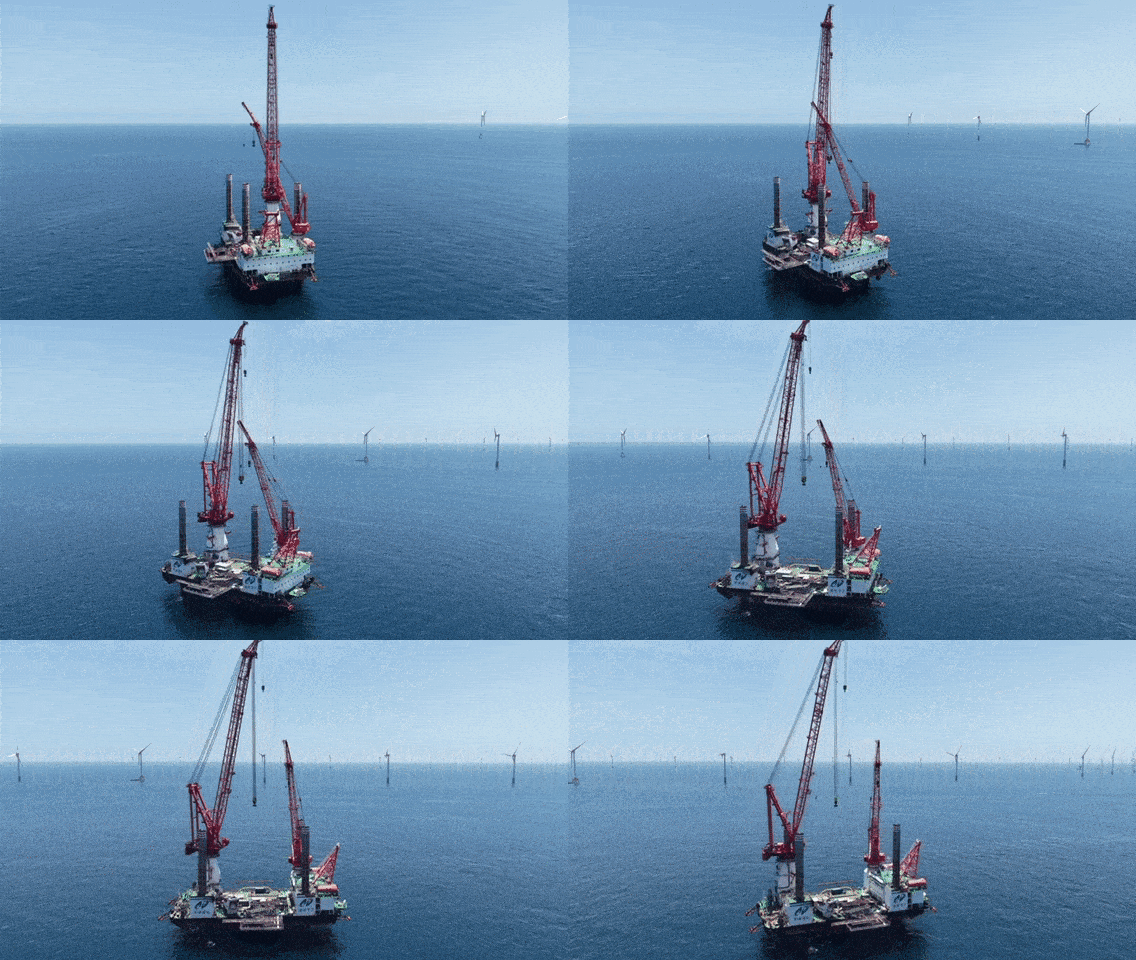
Deep-sea areas are the "main battlefield" for future offshore wind power. However, unlike nearshore areas, deep-sea wind power development faces an unavoidable "Achilles' heel": how to stably transmit massive amounts of green electricity from thousands of miles away back to land? The answer is flexible DC submarine cables. This is currently internationally recognized as the "optimal solution" for large-capacity deep-sea power transmission and a high ground fiercely contested by global offshore engineering giants. Recently, the Three Gorges Yangjiang Qingzhou Phase V and VII submarine cable centralized transmission project, undertaken by CCCC Haifeng, completed full laying operations in the Qingzhou sea area of Yangjiang, Guangdong. This world's first ±500 kV flexible DC submarine cable has successfully taken root on the deep seabed of the South China Sea, precisely connecting with the world's largest offshore converter station, the "Heart of the Sea Breeze," marking that China has formed a complete set of engineering capabilities in the field of flexible DC transmission for deep-sea offshore wind power, officially launching the "China Solution" for extracting electricity from the deep sea.
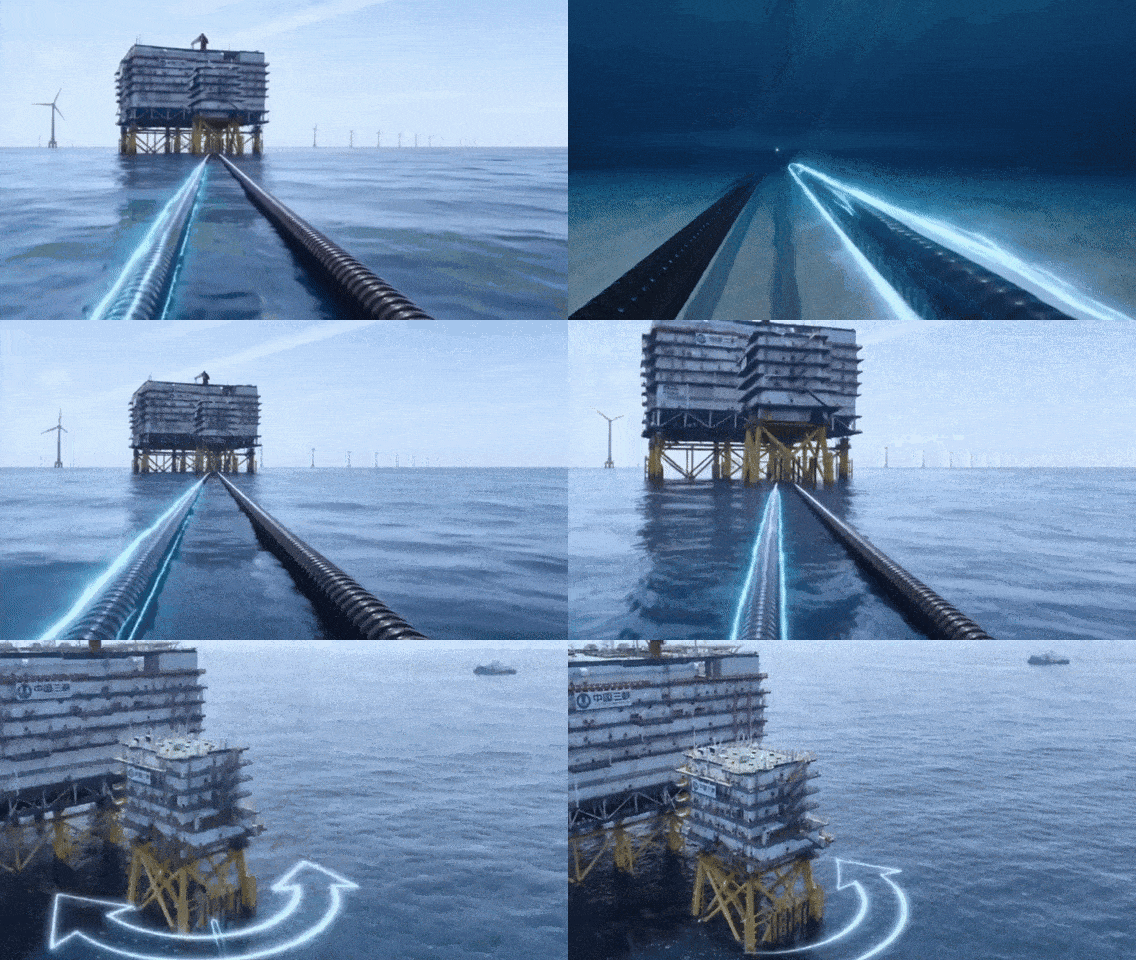
Also a submarine cable, what makes this ±500 kV flexible DC submarine cable so remarkable? Traditional offshore wind power mostly uses AC submarine cables. Once the length exceeds 70 kilometers, a strong "capacitance effect" occurs between the seawater and the cable, like a leaking water pipe, wasting most of the electrical energy halfway, making it impossible to deliver full capacity to shore. The beauty of flexible DC technology lies in this: the AC power generated by wind turbines is "transformed" into DC power through the converter station, then sent out via DC submarine cables, and converted back to AC after reaching shore. Since DC cables have no capacitance effect, losses can be reduced by about 60% compared to AC cables. However, for electricity to be transmitted, a "circuit" is needed. The ±500 kV flexible DC submarine cable has a total length of 88.8 kilometers, adopting a "1 circuit, 2 cables" bipolar design. The ± symbol represents the positive and negative poles of flexible DC transmission. These two submarine cables operate in tandem, one positive and one negative, together forming a complete transmission channel. One end connects to the "Heart of the Sea Breeze," and the other directly links to the onshore centralized control center, carrying the mission of transmitting 2000 MW of green electricity, pushing the capacity of this "power highway" to the global top level.
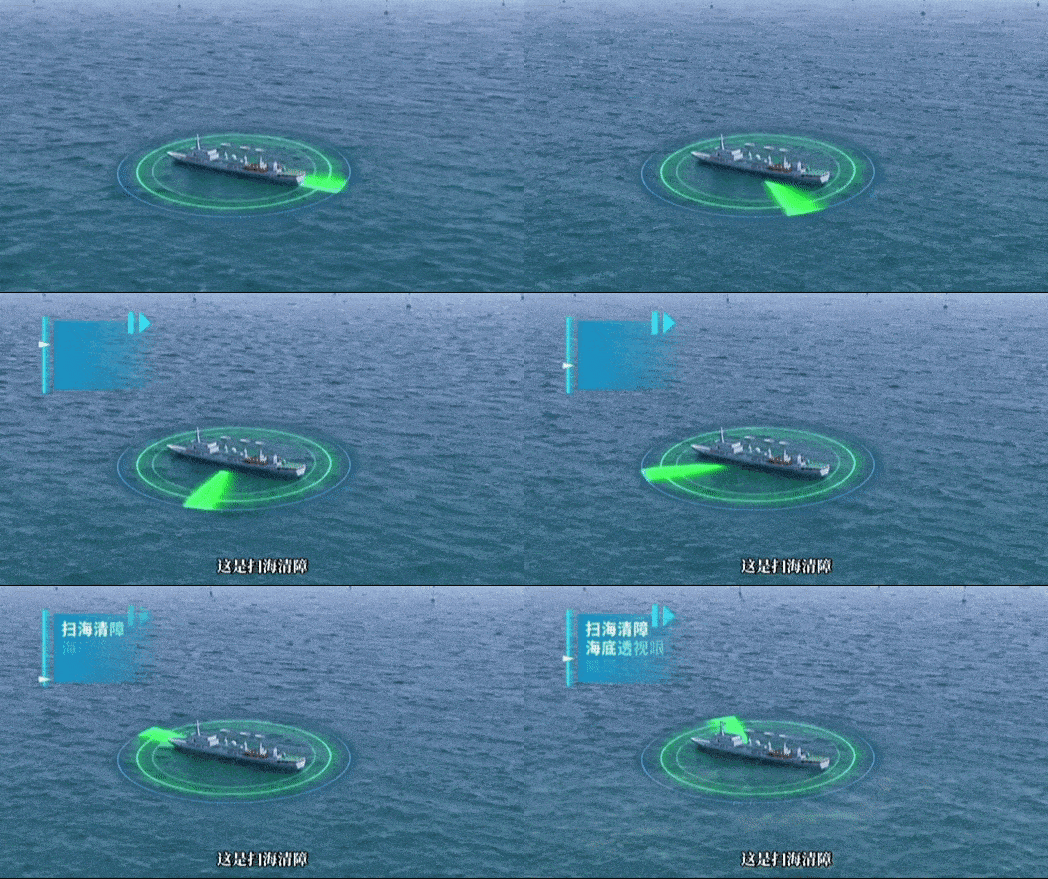
Laying submarine cables on the seabed of the South China Sea, with an average depth exceeding 40 meters, involves massive self-weight cable plows and thousands-of-ton cable laying vessels on one hand, and precision cables that cannot tolerate any damage on the other. The construction difficulty is comparable to "an iron man doing embroidery." As there were no previous domestic precedents for laying submarine cables of this grade, the project team embarked on a deep-sea technological breakthrough starting from scratch. Before formal laying, the project team comprehensively utilized high-precision sonar scanning technologies such as multi-beam echo sounders and sub-bottom profilers to accurately map the seabed topography and locate various obstacle points, creating a detailed "3D map" of the seabed. Subsequently, anchor boats were deployed for multiple rounds of sweeping and inspection along the entire designed laying route to thoroughly eliminate all hazards affecting the safe laying of the submarine cable, paving a smooth and safe deep-sea channel for the "delicate" cable. The fiber optic cluster inside the cable is the "neural center" of the entire system. During laying, the bending radius and tension control of the cable body must not deviate by even a hair's breadth. The deep-sea cable plow has a huge self-weight, and if subjected to strong ocean current impacts during operation, it can easily shake, directly transmitting vibrations to the cable body and causing damage. To this end, the project team repeatedly rehearsed the procedures, strictly selecting operation windows with wave heights below 1.5 meters to fundamentally avoid the risk of cable damage. To ensure precise routing and controllable cable tension throughout the laying process, the project adopted a multi-system coordinated guarantee, including differential navigation positioning, real-time burial depth monitoring, and routing deviation control, achieving real-time perception and dynamic correction of the cable's position and status. When sudden emergencies such as loss of positioning ship signals or vessel deviation occur, the on-site team can release cable slack and relieve line tension, creating buffer space for the cable body and relieving its taut state, fundamentally mitigating the risk of cable breakage and firmly holding the bottom line of construction safety.
Today, this 88.8-kilometer "deep-sea dragon" lies steadily on the seabed of the South China Sea, precisely connected to the "Heart of the Sea Breeze," forming a complete system of "collection - conversion - transmission." After the project is put into operation, the clean electrical energy from 163 wind turbines in Qingzhou Phase V and VII will transmit approximately 6 billion kWh of green electricity annually to the Guangdong-Hong Kong-Macao Greater Bay Area, equivalent to reducing carbon dioxide emissions by about 5 million tons. This is akin to adding a giant "green power bank" for the Greater Bay Area, effectively alleviating regional power supply and peak-shaving pressure. Striving for wind from the sea, extracting electricity from the sea. The completion of this energy artery lying quietly in the deep blue marks China's official transition from "nearshore AC" to "deep-sea flexible DC" for offshore wind power transmission. CCCC Group, with its practical achievements, has provided a replicable and scalable "China Infrastructure Solution" for global deep-sea offshore wind power development.