
On August 17, after 11 years of arduous construction, the Gaoligong Mountain Tunnel, a key control project of the Darui Railway, achieved a major construction milestone as its inclined shaft and No. 1 vertical shaft pilot tunnel were successfully connected. The two working faces, advancing toward each other for eleven years, "joined hands" at a depth of 765 meters underground, marking another world-class engineering challenge overcome in the construction of southwest China's railway network.
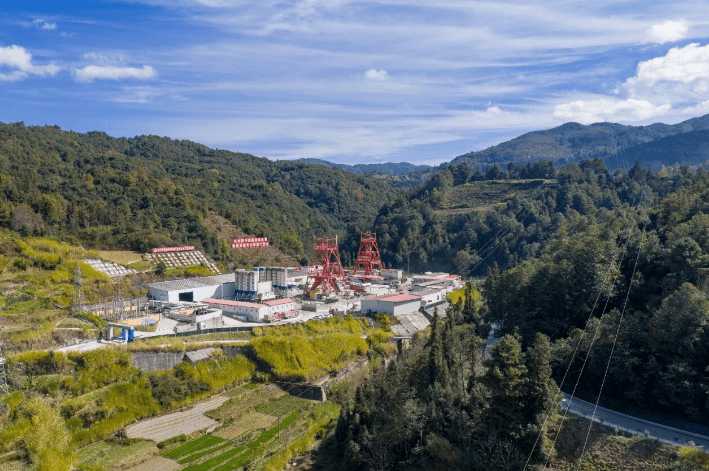
The Gaoligong Mountain Tunnel is the "throat" control project of the Baoshan–Ruili section of the Darui Railway. Stretching 34.5 kilometers, it is an ultra-long, deeply buried mountain tunnel in Asia, with extremely complex geological conditions, earning it the nickname "underground geological museum" within the industry. During construction, frequent hazards such as high-pressure water inrush, large deformation of surrounding rock, rock bursts, and accumulation of harmful gases occurred, with numerous world-class engineering challenges intertwined.
This connection of the tunnel's inclined shaft and No. 1 vertical shaft pilot tunnel is a pioneering key node in the deep-section construction, encompassing core risks such as high-pressure water-rich conditions and complex surrounding rock. Peak daily water inflow during construction reached 33,000 cubic meters, equivalent to the capacity of 13 standard Olympic-sized swimming pools, and workers operated year-round in deep waterlogged environments. Meanwhile, the No. 1 vertical shaft, at 765 meters deep, is the deepest railway shaft in China. With a primary rock temperature exceeding 39°C at the bottom, compounded by mechanical heat dissipation, the working face temperature surpassed 42°C. High temperatures, stuffiness, and limited ventilation long constrained construction safety and tunneling efficiency.
Faced with the complex and ever-changing geological conditions, the construction team developed a comprehensive set of construction techniques adapted to extreme strata through long-term on-site exploration and repeated trial iterations. For high-pressure water-rich altered zones, they adopted a treatment strategy of "increasing space, inducing water inrush, limiting scale, and controlling deformation"; for high-pressure water-rich fractured zones, they implemented a disposal plan of "increasing space, guiding drainage, preventing water inrush, and controlling deformation," systematically resolving core challenges such as surrounding rock instability and mud inrush and water gushing. Through scientific research efforts, they progressively established nine core technical systems, including comprehensive water control for ultra-deep railway shafts, prevention and control of ultra-high geothermal heat hazards, and mechanized construction of single-bore small-section mountain tunnels, providing a standardized reference solution for similar extreme-geology tunnel construction.
Throughout construction, all participating parties placed great emphasis on safety management, jointly building a three-in-one integrated geological prediction system incorporating TSP, geological radar, and advanced drilling, enabling precise detection, early prediction, and proactive treatment of geological hazards ahead. Leveraging an intelligent dispatching and command platform that integrates construction scheduling, material transport, safety monitoring, and online consultation, they created an "intelligent brain" for underground construction, achieving precise coordination of multi-process parallel operations and closed-loop management of risk hazards.
This connection of the inclined shaft and No. 1 vertical shaft pilot tunnel has effectively resolved the key bottleneck that previously constrained the tunnel's overall progress. Following the connection, the two working zones of the inclined shaft and vertical shaft achieved underground linkage, opening up multiple parallel working faces for main tunnel construction. Haulage and material supply operations were upgraded from single-line to dual-line coordination, significantly enhancing tunneling efficiency. At the same time, the ventilation, drainage, and emergency evacuation systems were systematically optimized, further strengthening construction safety management capabilities.
The Darui Railway spans 330 kilometers with a bridge-tunnel ratio as high as 76%, serving as strategic infrastructure for improving the railway network on China's southwestern frontier and opening up the external passage of western Yunnan. At present, apart from the Gaoligong Mountain Tunnel, all other pre-track works have been essentially completed. Once the Gaoligong Mountain Tunnel is fully completed, the Darui Railway will completely open up the "last mile" of the southwestern outbound corridor, elevating western Yunnan from a railway network dead-end to a frontier gateway opening toward South Asia, of great significance for promoting high-quality regional economic development and deepening external connectivity.