
Unit 2 of China Guangdong Qingyuan Power Plant has successfully achieved biomass co-firing at a 10% energy ratio, marking the first domestic case of a million-kilowatt double-reheat unit realizing high-proportion biomass co-firing power generation. This fills a domestic technological gap and injects new momentum into the clean and low-carbon transformation of thermal power units.
CHN Energy Guangdong Qingyuan Power Plant is the only large-scale clean and efficient power plant in China that operates four million-kilowatt double-reheat units under integrated management. The project has been selected as a pilot for new power system construction capacity by the National Energy Administration. This initiative adopts the advanced independent biomass combustion technology developed by Longyuan Technology, achieving a 10% heat ratio from biomass co-firing using materials such as straw and furniture offcuts. During the co-firing process, the mixed combustion of biomass fuel and coal remains stable, with all key operating parameters—including furnace temperature, flue gas emissions, and unit load—within acceptable ranges.
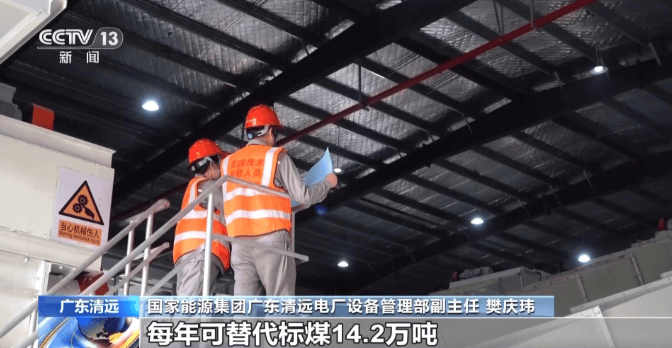
Fan Qingwei, Deputy Director of the Equipment Management Department, CHN Energy Guangdong Qingyuan Power Plant: Biomass co-firing power generation can replace 142,000 tonnes of standard coal annually and reduce carbon dioxide emissions by 347,000 tonnes per year, with an ecological benefit equivalent to planting 1.8 million trees.
Straw and furniture waste fed into the power plant
Helping thermal power achieve clean and low-carbon operations
Straw, bark, and furniture offcuts—agricultural and forestry wastes that once held little value—now have a new purpose in thermal power plants. How does high-proportion biomass co-firing turn waste materials into clean energy and chart a new path for the green upgrade of traditional thermal power units?
Guangdong is a major furniture-producing province, generating large quantities of furniture offcuts every year, along with agricultural and forestry wastes such as straw, bark, and branches. In the past, these were mostly burned simply as firewood, generating virtually no economic value. Now, power generation companies process these biomass materials through crushing and drying, transforming them from simple agricultural waste into millimeter-scale industrial fuel powder that burns thoroughly mixed with coal powder in the boiler. As a result, less coal is consumed, and carbon emissions are significantly reduced.
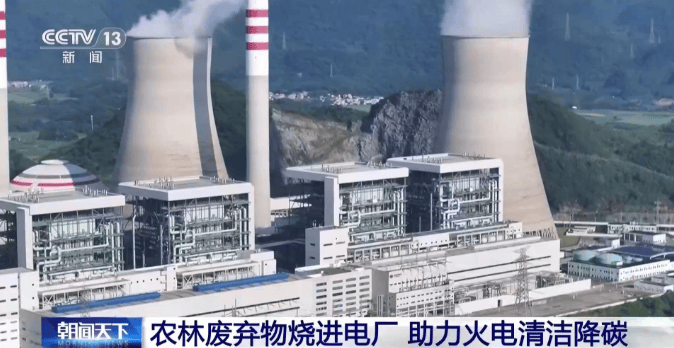
The thermal power unit achieving high-proportion biomass co-firing for the first time may look no different from other thermal units on the outside, but inside the furnace, eight dedicated biomass burners have been added. Biomass co-firing is not simply mixing two fuels and burning them together. Plant-based biomass materials like straw and wood have low ignition points and burn quickly.
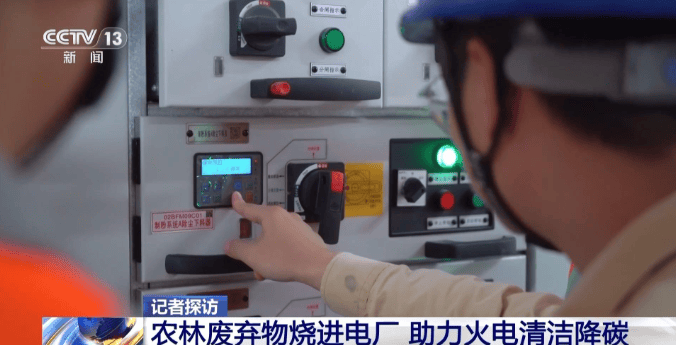
Coal powder, a fossil fuel, has a higher ignition point and burns longer. The difference in complete combustion temperature between the two is approximately 200 degrees Celsius. If the biomass proportion is too high during co-firing, it can easily cause slagging and ash deposition in the furnace, affecting the safe and stable operation of the generating unit—this is the key technical challenge. After hundreds of experiments, the research team finally achieved high-proportion biomass co-firing at over 10%. Compared with pure biomass boilers, this approach can generate twice as much electricity.

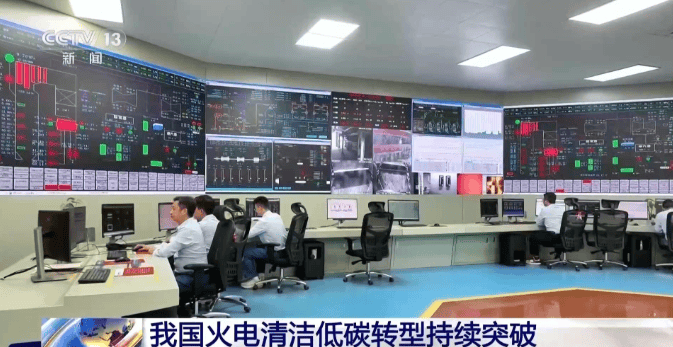
In the plant's "brain"—the centralized control center—the monitoring screens show fiercely burning biomass fuel on one side, while on the other side is the traditional fossil fuel, coal powder. The two are mixed and burned together in the same furnace chamber according to strict ratios and precise particle sizes. For every 10 kilowatt-hours of electricity generated, 1 kilowatt-hour comes from biomass such as straw, bark, and furniture waste. A single unit alone can consume over 360,000 tonnes of agricultural and forestry waste annually.

Zhang Yong, Project Manager for Biomass Co-firing, Longyuan Technology, Kehuan Group: Through biomass co-firing retrofitting, the load adjustment speed of traditional thermal power units has increased by 30%. In other words, the unit can quickly adjust to generate more power when electricity prices are high, and flexibly reduce load for stable operation when prices are low, maximizing economic benefits.
China's thermal power continues to achieve breakthroughs in clean and low-carbon transformation
Under the "dual carbon" goals, China's thermal power industry continues to deepen its transformation and upgrade, achieving systematic breakthroughs in clean and low-carbon operations and efficient regulation. The supporting and regulating role of thermal power in the new power system has become more prominent, providing a solid foundation for the green and low-carbon energy transition.
Currently, China's three major low-carbon retrofit pathways for thermal power are biomass co-firing, green ammonia co-firing, and CCUS (carbon capture, utilization, and storage). Among these, biomass co-firing is the most mature and the most widely applied technology route in low-carbon retrofitting of thermal power units. To date, more than 100 biomass co-firing projects have been commissioned or are under planning and construction, covering direct biomass co-firing, gasification coupling, and other methods.
According to the latest data from the China Electricity Council, by the end of 2025, the national installed capacity of biomass power generation reached 47.43 million kilowatts, accounting for 1.2% of total installed capacity; national biomass power generation reached approximately 225 billion kilowatt-hours, accounting for 2.1% of total electricity generation.
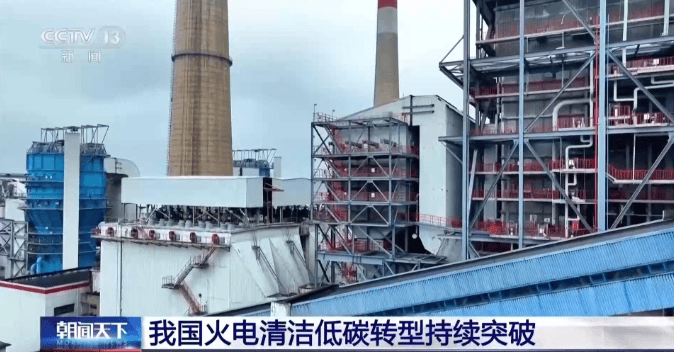
China has now built the world's largest clean coal-fired power system, with continuous optimization of ultra-low emission levels and unit operating efficiency. According to the plan, by 2027, China's low-carbon power generation technology routes for coal power will further mature and expand, with retrofitted projects achieving a reduction of approximately 50% in carbon emissions per kilowatt-hour compared with similar units in 2023, approaching the carbon emission levels of natural gas-fired generating units.