
China is the world's largest consumer of iron ore, accounting for more than half of global consumption, with a high degree of external dependence, and has long faced challenges in resource pricing power and supply chain security. To break free from this situation, the Institute of Process Engineering of the Chinese Academy of Sciences, after more than two decades of continuous research, has achieved the world's first breakthrough in the core technical bottleneck of efficient utilization of refractory iron ore. The world's largest magnetizing roasting project for refractory iron ore, built based on this technology, also passed its completion acceptance today (September 1).
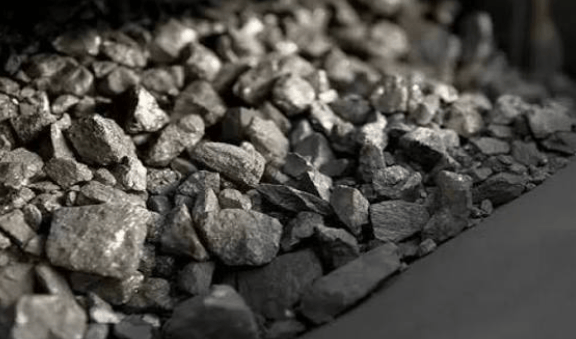
Refractory iron ore refers to primary ores from which iron minerals cannot be effectively separated from impurities using conventional beneficiation methods, and which cannot produce high-grade iron concentrate. Ultra-low-grade iron tailings discharged after ore beneficiation were previously mostly regarded as waste materials with extremely low utilization value.
To improve the utilization rate of such mineral deposits and beneficiation waste, the research team at the Institute of Process Engineering of the Chinese Academy of Sciences broke through the limitations of traditional magnetizing roasting technical solutions and successfully established a complete new technology for magnetizing roasting with precise control of particle residence time. This technology integrates multiple core innovations, including directed transformation processes for complex minerals, intensified low-temperature reaction theory, and methods for controlling particle residence time, enabling iron tailings with an iron content of only 11% to produce iron concentrate products with an iron mass fraction of 65% after processing.
Based on this technology, the world's largest fluidized magnetizing roasting project for refractory iron ore, jointly developed and constructed by the Institute of Process Engineering of the Chinese Academy of Sciences and Ansteel Mining, was put into operation in January this year. The project has three production lines, each capable of processing up to 1.85 million tons of refractory iron ore annually, with a conversion rate of iron-bearing minerals as high as 98%. As a result, most of the recoverable iron resources in the ore can be converted into high-value products, significantly improving economic benefits and truly achieving "turning waste into treasure."
This achievement is expected to promote the recycling of waste resources such as iron tailings in China, while revitalizing refractory iron ore resources, enhancing the country's comprehensive utilization capacity of refractory iron ore, reducing external dependence, meeting the core raw material requirements for steel smelting, and supporting production demands in industrial manufacturing sectors such as construction, bridges, automobiles, and ships.