
On September 1, according to CCTV News citing the Standardization Administration of China, the world's first international standard for legged robots, "Robotics — Performance Criteria and Related Test Methods for Service Robots — Part 5: Locomotion of Legged Robots," led by Chinese experts, was officially released recently.
"Legged robots" are a category of robots that walk, run, jump, climb slopes, and traverse obstacles using their "legs" (Note from IT之家: such as humanoid robots and robotic dogs). Currently, these robots have begun to undertake practical tasks such as performance, inspection, transportation, and search and rescue. However, for a long time, there has been a lack of a unified international benchmark for evaluating how well they "walk" or how effectively they "perform." The international standard released this time will establish a unified evaluation system globally for the first time.
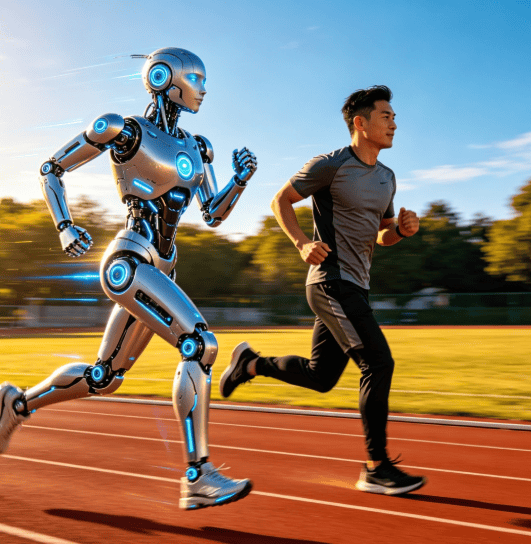
A key highlight of the standard is its focus on evaluating locomotion performance in real-world scenarios: it not only examines "whether it can move" but also "how well it moves." The report points out that a robot that walks well on flat ground does not necessarily perform equally well when faced with stairs, slopes, or obstacles.
This standard incorporates real-world operational scenarios such as stairs, slopes, and obstacles into the evaluation system, establishing multi-dimensional characterization and assessment methods. This means that evaluation results are closer to practical applications, truly reflecting a robot's combat capability in complex environments.
Another highlight of this international standard is that it not only compares "leg speed" but also emphasizes "task completion." For robots to enter the real world, having agile "legs" alone is not enough. They must not only walk steadily but also see clearly, judge accurately, and perform well. For example, when a robot is deployed to an area with complex conditions for inspection or search and rescue, it must not only be able to traverse the area but also perceive the surrounding environment, understand task requirements, and make judgments and decisions based on the on-site situation.
Therefore, the standard comprehensively incorporates capabilities such as perception, interaction, and decision-making into the evaluation, achieving a leap from "single locomotion performance" to "comprehensive task capability," making the evaluation more scientific, comprehensive, and reliable.
The release and implementation of the standard can help enterprises conduct product development and performance improvement more scientifically, enable testing and evaluation institutions to conduct tests based on unified methods, and allow users to gain a more objective understanding of the locomotion performance of different products.