
According to recent reports from Space.com and MIT Technology Review, the nonprofit Fermi Explorer Mission has unveiled a low-cost interstellar plan, targeting the launch of a small probe before the end of 2029 to travel to the Alpha Centauri system, about 4.4 light-years away. The route is planned by AI, with the entire journey taking approximately 80,000 years and a total budget of under $15 million. In a statement, co-founder and chairman Philip Johnston said that no one will be alive to see the results when the journey ends, and that is precisely the point: "This is about taking the first step humanity is capable of, and inspiring future generations to keep pushing beyond the limits we have inherited."
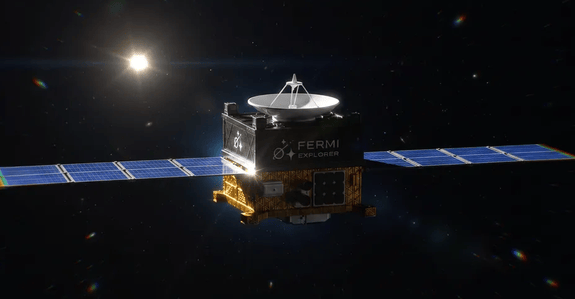
The mission sets four hard requirements: the probe must fly toward the Alpha Centauri system and complete at least 99% of the entire journey within 80,000 years; the payload must weigh at least 1 kilogram, enclosed in a 10×10×10 centimeter space; launch must occur before the end of 2029; and the full-cycle cost must be under $15 million.
The mission's technical approach abandons immature concepts such as laser sails and nuclear fusion, opting instead for solar electric propulsion. The trajectory planning is carried out by Physical Superintelligence (PSI) at the Physical AI Laboratory, which uses AI models including Claude and GPT to break the project into subtasks and then determine how to execute them. According to the plan, after entering orbit, the probe will first maneuver inward toward the Sun, repeatedly lowering its perihelion, firing briefly in regions of intense sunlight and high heliocentric velocity, gradually accumulating escape velocity before entering interstellar coast. No fixed duration for the powered phase or final velocity has been given yet, leaving it as a demonstrable concept for manufacturers to optimize.
The Alpha Centauri system, consisting of Alpha Centauri A, Alpha Centauri B, and Proxima Centauri, is the Sun's nearest stellar neighbor. Although NASA's Voyager 1 and Voyager 2 have entered interstellar space, they are not aimed at any specific star. Fermi Explorer, by contrast, is the first mission directed toward another stellar system. In 2016, Stephen Hawking and investor Yuri Milner announced the Breakthrough Starshot mission, which proposed using lasers to push a tiny light sail to about one-fifth the speed of light, reaching the system in around 20 years, with a $100 million commitment for proof of concept—yet no launch date has been set to this day.
In terms of payload, the probe will carry scientific and artistic materials, messages for future civilizations, children's information, and a replica of the Voyager Golden Record. The project will also open a three-month payload solicitation and invite scientists, engineers, and the public to participate in improvements. Its advisors include former Blue Origin president Rob Meyerson, with day-to-day execution led by former U.S. Air Force officer Garrett James.
Johnston stated that subsequent higher-speed interstellar propulsion technologies could be continued by future generations. The mission is currently in the phases of soliciting bids, fundraising, and payload collection, with the 2029 launch, $15 million budget, and 80,000-year arrival all being planned targets.