
The world's first low-speed two-stroke hydrogen-fueled engine developed by Japan Engine Corporation (J-ENG), which can be applied to large merchant ships, has completed all onshore combustion verification tests, and an unveiling ceremony was held recently.
The 6UEC35LSGH-type hydrogen-fueled engine developed in this project achieved a hydrogen co-firing ratio of over 95% during factory testing. According to test data from the New Energy and Industrial Technology Development Organization (NEDO) of Japan, this engine type reduces greenhouse gas emissions by more than 95% compared with conventional heavy fuel oil engines. This engine type adopts high-pressure hydrogen microsecond-level precision direct injection technology, which can effectively solve technical challenges such as hydrogen leakage, unstable combustion, and abnormal cylinder knocking, achieving stable combustion operation throughout the entire process. At present, this engine type has passed the review by Nippon Kaiji Kyokai (NK) and obtained the safety and performance certifications required for commercial ship operation.
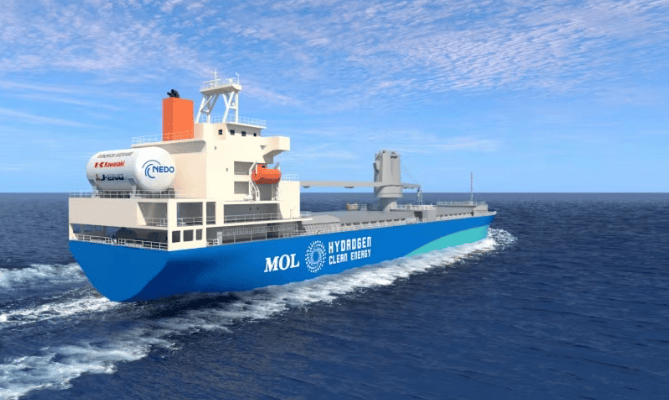
The project was jointly tackled by multiple Japanese marine engineering enterprises. Among them, J-ENG was responsible for the overall development and manufacturing of the engine, Kawasaki Heavy Industries developed the ship hydrogen fuel supply system as a supporting component, Yanmar Power provided hydrogen fuel auxiliary equipment, Onomichi Dockyard undertook the construction of the demonstration ship, and Mitsui O.S.K. Lines (MOL), as the project shipowner, participated throughout the entire process of actual ship application verification.
According to the project plan, this hydrogen-fueled engine will officially leave the factory in January 2027 and be installed on a 17,500 deadweight ton multi-purpose vessel under construction at Onomichi Dockyard. After the ship is delivered, Mitsui O.S.K. Lines will conduct a three-year offshore demonstration voyage from fiscal year 2028 to fiscal year 2030, continuously collecting equipment operation data through actual international trade route operations to verify the engine's ocean-going performance and stability.
It is understood that J-ENG is currently advancing zero-carbon power technology research and development in parallel. Following the technological implementation of large ammonia-fueled low-speed engines, the successful debut of this hydrogen-fueled engine has formed a dual-type zero-carbon marine engine technology reserve for hydrogen fuel and ammonia fuel, continuously improving the clean energy ship power product system.