
Galactic Energy recently successfully completed a 130-second long-duration rated-condition test firing of the main engine of the Pallas-2 large reusable liquid launch vehicle — the new-generation 100-tonne-class Cangqiong-90 liquid oxygen/kerosene engine.
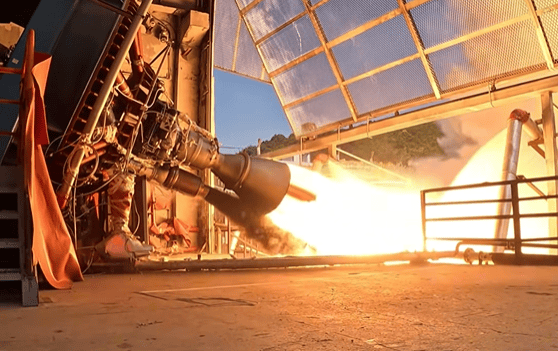
With this, the engine has completed more than 20 research and development test firings, officially entering the reliability verification test phase and taking a decisive step toward engineering qualification and flight application.
This test firing was a comprehensive examination of the engine's sustained operating capability under rated conditions. During the test, the engine started according to the predetermined program, combustion under the main-stage condition was stable, core parameters such as thrust, flow rate, and pressure met design requirements, key components including the turbopump, thrust chamber, and valve system operated in good condition, and thermal environment and vibration characteristics were all controlled within design margins. This test firing strictly completed all preset subjects in accordance with the test outline. Key indicators such as engine startup impact, steady-state precision, and shutdown characteristics all reached expected targets, fully verifying system compatibility, component operational reliability, and long-duration thermal environment adaptability.
It is reported that the Cangqiong-90 engine adopts a gas generator cycle, with sea-level thrust of 30 to 120 tonnes; sea-level specific impulse of no less than 282 seconds, and thrust-to-weight ratio exceeding 150. Its wide-range deep throttling capability can accommodate the thrust requirements of the rocket's ascent phase and the deceleration needs of the recovery and landing phase, providing core power support for the Pallas-2's vertical recovery and reuse.
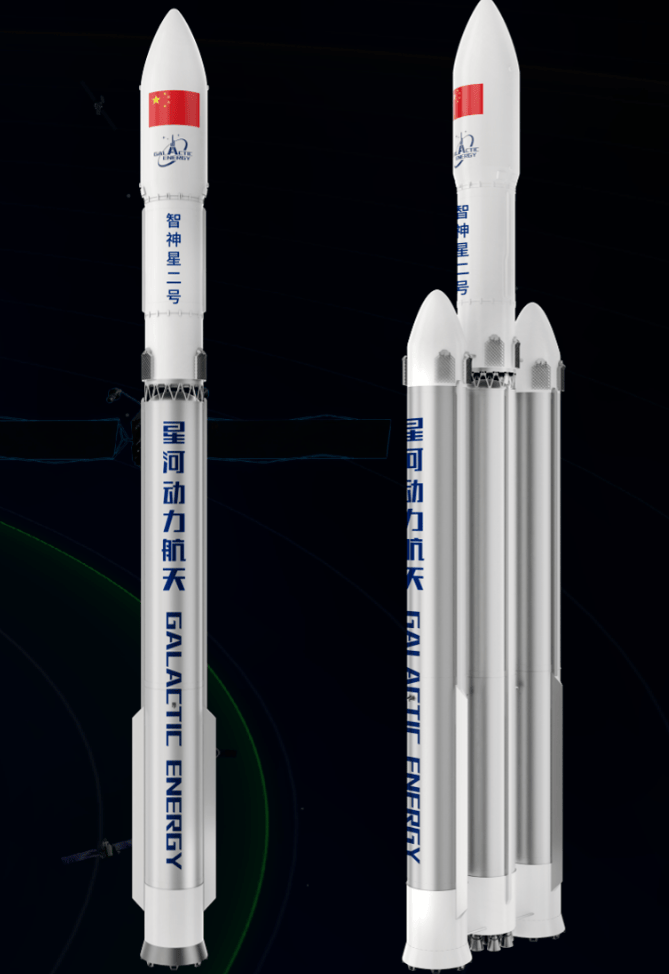
Pallas-2 is a new-generation large liquid reusable launch vehicle developed by Galactic Energy to meet the launch demands of large-scale internet satellite constellation networking. The rocket has a diameter of 4.5 meters and adopts a modular common design. Its basic configuration has a liftoff mass of approximately 781 tonnes, liftoff thrust of approximately 910 tonnes, and low Earth orbit payload capacity of 20 tonnes; the CBC (Common Booster Core) configuration has a liftoff mass of approximately 1,950 tonnes and a low Earth orbit payload capacity of 58 tonnes. The entire rocket's main propulsion is provided by 9 Cangqiong-90 engines in parallel.