
At 10:40 on September 17, the Kuaizhou-11 solid launch vehicle lifted off from the Jiuquan Satellite Launch Center, successfully sending the Caiyun SAR01 satellite and the Xinglianti Tianyuan YG01 satellite into their designated orbits. This marks the world's first commercial medium-inclination InSAR (Interferometric Synthetic Aperture Radar) remote sensing satellite constellation to successfully enter orbit.
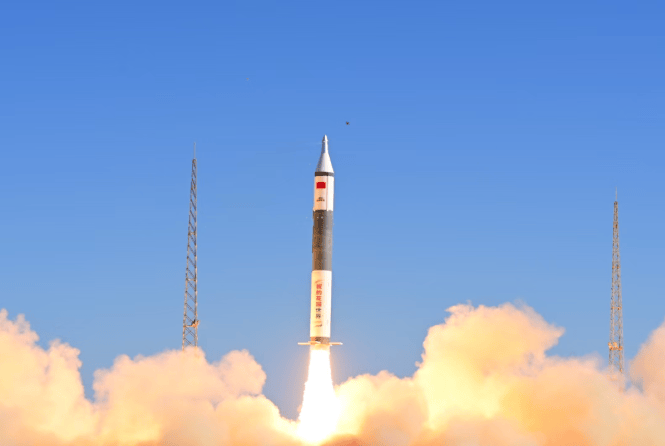
The Caiyun SAR01 satellite was jointly developed by the Yunnan Provincial Bureau of Geology and Mineral Exploration and Development, Yunnan Geology and Mineral Resources Group Co., Ltd., and Spacety Co., Ltd. (hereinafter referred to as "Spacety"); the Xinglianti Tianyuan YG01 satellite was jointly developed by Xinglianti (Wuxi) Aerospace Technology Co., Ltd. and Spacety.
Unlike traditional sun-synchronous orbit InSAR satellites, this satellite constellation adopts a medium-inclination (55°) orbit design, achieving breakthroughs in three core capabilities: First, medium-inclination orbits enable high-frequency revisits, solving the industry pain point of traditional InSAR's "slow revisit" — the interferometric revisit period for target areas can be compressed from the current several days to 1 day, and with subsequent multi-satellite networking, it can be further shortened to several hours; Second, three-dimensional deformation inversion is achieved under the medium-inclination observation system, solving the common challenge of traditional InSAR's "inaccurate measurement" of north-south deformation; Third, multi-angle collaborative imaging eliminates observation blind spots in urban high-rise areas and deep mountain valleys, solving the industry pain point of traditional InSAR's "incomplete coverage."
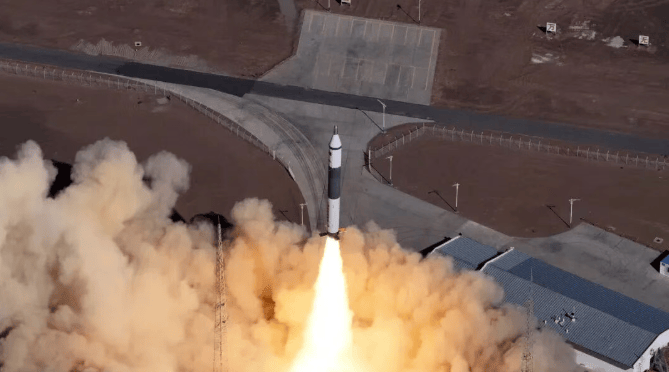
Leveraging these capabilities, the satellites can serve operational fields such as geological disaster monitoring in mountainous areas, identification of at-risk buildings in cities, inspection of hydropower projects, and safety protection of major transportation routes, building a monitoring system of "routine daily monitoring, on-demand emergency response," and providing near-real-time space-based observation support for safety monitoring across various industries.
In line with the national civil space infrastructure construction plan, Spacety is steadily advancing the global networking layout of 120 high-performance synthetic aperture radar satellites, collaborating with strategic partners to build a full-chain intelligent ecosystem of "sensing-computing-application" in space.
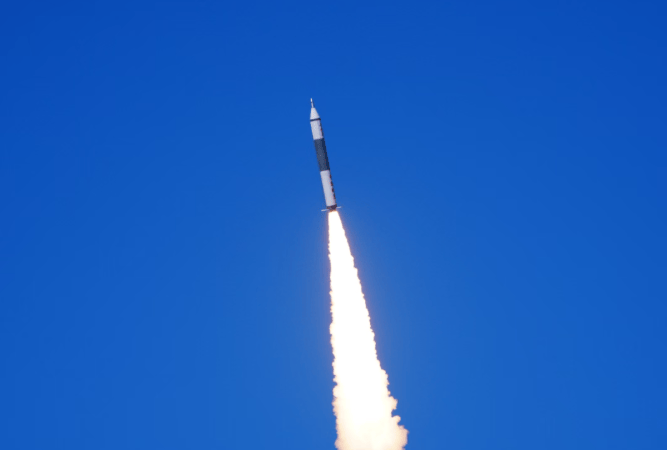
The Kuaizhou-11 rocket was developed by Kuaizhou Aerospace Space Technology Co., Ltd., with a payload capacity of 1 ton to a 700-kilometer sun-synchronous orbit. It features high flight reliability, high orbit insertion accuracy, short preparation cycles, minimal support requirements, and low launch costs.
This mission marks the 40th flight of the Kuaizhou series of launch vehicles.