
On the 28th, China's self-developed thermally coupled direct seawater electrolysis system for hydrogen production with co-production of strategic elements achieved over 1,000 hours of continuous stable operation at a pilot test base in Rizhao, Shandong Province. An acceptance panel composed of five academicians and several senior experts concluded that this achievement marks China's conquest of the global technical challenge of synergistic co-production of hydrogen from seawater and marine strategic elements, establishing a first-mover advantage in technological breakthroughs in this field.
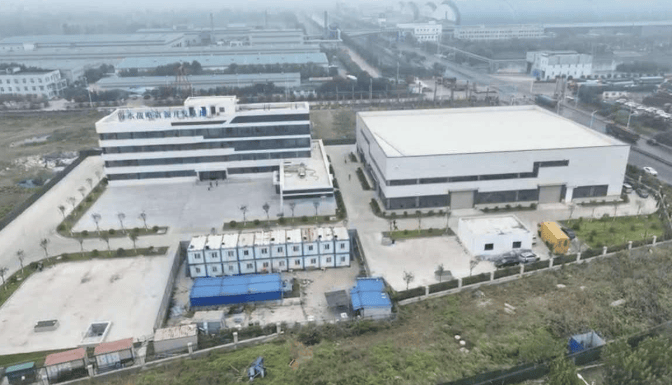
Thermally coupled direct seawater electrolysis for hydrogen production is an advanced technology that eliminates the need for seawater desalination and directly utilizes industrial waste heat to reduce the energy consumption of hydrogen production. Tang Bo, project team leader and academician of the Chinese Academy of Sciences, summarized the process in one sentence: "Pump in seawater, consume waste heat, produce hydrogen, freshwater, and strategic elements — without using a single drop of freshwater throughout the entire process."
According to reports, the device can process approximately 800 tons of seawater per year and produce 260,000 standard cubic meters of high-purity hydrogen annually. This green hydrogen can reduce carbon dioxide emissions by approximately 460 tons per year.
What exactly makes hydrogen production from seawater so difficult? Tang Bo explained that directly electrifying seawater presents two inescapable challenges: first, scaling — during seawater electrolysis, alkalinity rises around the cathode, causing calcium and magnesium ions to form a hard crust on the electrodes, much like the ever-thickening scale at the bottom of a kettle, leading to electrode failure; second, corrosion — chloride ions in seawater are highly corrosive, and electrodes immersed in seawater over time become pitted and corroded, potentially releasing toxic chlorine gas if not properly handled.
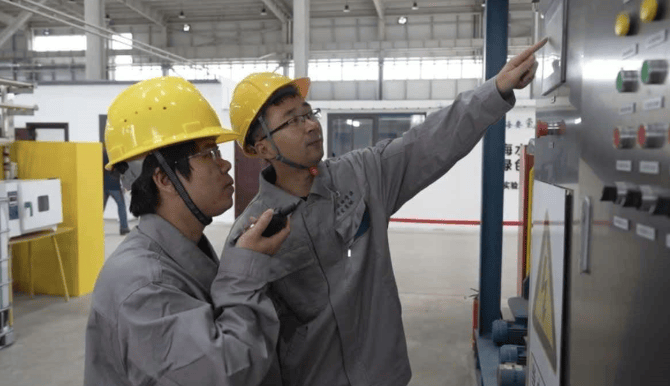
"The breakthrough relies on two approaches," said Tang Bo. The first is cascaded heat utilization. The team introduced low-grade waste heat emitted by nearby steel enterprises and the heat generated during the electrolysis process itself into the system for cyclic utilization — akin to using the residual embers in a stove to cook porridge after steaming buns, without needing to relight the fire. He explained that electrolysis itself is still driven by electricity, and waste heat cannot replace electricity — it simply brings the electricity consumption down substantially. The other approach is synchronous enrichment of strategic elements, whereby under seawater hydrogen production electrolysis conditions, continuous-flow online dynamic reactions are used to extract strategic elements from seawater in situ, elevating trace resources that would otherwise be like "looking for a needle in a haystack" to high concentrations with industrial-scale extraction value.
Xu Tongwen, academician of the Chinese Academy of Sciences and professor at the University of Science and Technology of China, stated that the process route of "waste heat utilization — seawater hydrogen production — synergistic production of strategic resources" puts both the waste heat of coastal factories and marine resources to good use, providing a feasible technical solution for low-cost, large-scale development of marine green hydrogen.