
The China Electric Power Research Institute has completed an in-situ test of the corona effect on conductors at an ultra-high altitude test site at 5,000 meters in Amdo, Tibet. This test fills the gap in test data for ultra-high altitude power transmission and marks China's first systematic acquisition of key parameters—including corona inception voltage, corona loss, audible noise, and radio interference—for conductors across the full altitude gradient from plains to 5,000 meters.
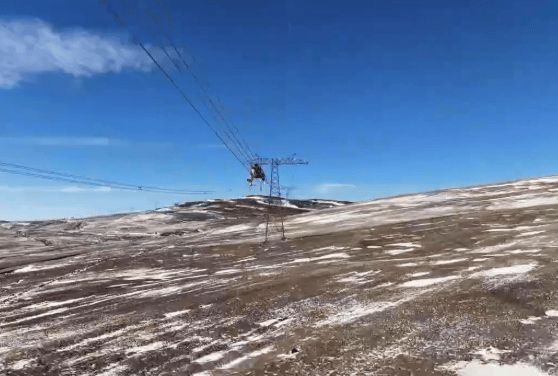
This plateau test effectively resolves the long-standing problem of data deficiency in ultra-high altitude power engineering design. As the West-to-East Power Transmission strategy continues to advance, ultra-high-voltage transmission corridors for transmitting Tibet's electricity outward traverse the ultra-high altitude regions of the Qinghai-Tibet Plateau. The high-altitude, low-air-pressure environment intensifies conductor corona discharge, causing line losses and electromagnetic interference to become abnormally prominent. Previous domestic and international studies were mostly limited to areas below 4,000 meters, and measured data at the 5,000-meter level were virtually nonexistent, leaving engineering design to rely on extrapolation from low-altitude empirical formulas with limited accuracy.
To overcome this challenge, the research team, building on more than 20 years of experience in electromagnetic environment control science and technology research for the State Grid, formulated a test plan of "gradient altitudes—multiple climate conditions—multiple conductor types," and achieved rapid cross-altitude deployment relying on detachable corona cages and mobile high-voltage power supplies. The test covered typical conditions such as dry and rain-wet conditions, collecting key data across multiple dimensions with a measurement accuracy of ±2%. At the 5,000-meter ultra-high altitude site, researchers applied voltage step by step to multiple types of bundled conductors and conducted fine sampling point by point, successfully building a basic database of ultra-high altitude corona characteristics.
The test results show that in the 5,000-meter altitude environment, the corona inception field strength of conductors is approximately 40% lower than that on the plains, and the corona effect exhibits significant non-linear growth with altitude. These measured conclusions provide authoritative test evidence for revising prediction models of the ultra-high altitude corona effect, and can significantly enhance the scientific rigor and accuracy of conductor selection and tower head structure design for high-altitude transmission lines.