Report: Africa's Agricultural Financing Gap Ranges from $75 Billion to $200 Billion
Wedoany.com Report on Mar 13th, The African agricultural sector faces an annual financing gap of $75 billion to $200 billion, which constrains the continent's productivity and economic growth. Experts point out that agriculture employs about half of Africa's workforce and is a core pillar of many economies, yet it receives less than 5% of total commercial lending. 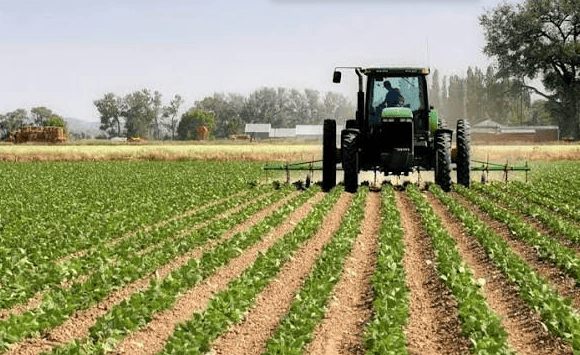
A report from the Milken Institute shows that reduced traditional donor funding and increased government debt pressures have exacerbated the financing difficulties, urgently requiring innovative mechanisms to mobilize capital. The report identifies six scalable financing opportunities to accelerate agricultural development and ensure food security.
Debt-for-food-security swaps are one such opportunity, inspired by debt-for-nature agreements, allowing for the restructuring of sovereign debt and the redirection of savings towards agricultural investments. In 2023, Gabon completed a $500 million debt swap, and Kenya has a related $1 billion agreement under proposal.
Securitization of agricultural loan portfolios is another pathway, attracting institutional investors by bundling well-performing loans. Transactions by NSIA Banque in Côte d'Ivoire and Benin, supported by the International Finance Corporation, and Sun King's $156 million securitization of solar receivables demonstrate the applicability.
Commodity-linked bonds and syndicated loans use export revenues from products like cocoa and coffee as collateral to support farmer cooperatives and agricultural value chains. African sovereign wealth funds manage over $100 billion in assets and can serve as anchor investors, as seen in the $2.5 billion fertilizer project involving Ethiopia's Dangote Group and an investment holding company.
Guarantee instruments can mitigate risks and encourage bank lending; Nigeria's risk-sharing system guaranteed over $69 million in loans by 2025. "Fund-of-funds" platforms pool capital and diversify risk to attract long-term investors like pension funds.
The report emphasizes that addressing Africa's agricultural financing challenges requires market-driven, large-scale financial structures to mobilize billions of dollars to support farmers, strengthen food systems, and improve livelihoods.
Related Products


714CD Series C-Band Weather Radar
Chengdu Zhongdian Jinjiang Information Industry Co., Ltd.
4HS-8 High-efficiency Peanut Inverted-laying Harvester
Hebei Yongfa Hongtian Agricultural Machinery Manufacturing Co., Ltd.




Industrial and Commercial Point-Type Gas Detector
Jinan Benan Technology Development Co., Ltd.