NVIDIA GTC Showcases AI Agent Systems Accelerating Life Sciences Research
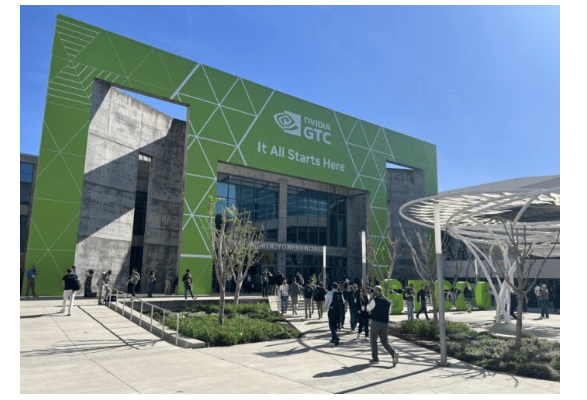
en.Wedoany.com Reported - At the 2026 NVIDIA GTC conference in San Jose, California, AI agent systems emerged as a focal point driving innovation in life sciences. NVIDIA CEO Jensen Huang highlighted OpenClaw in his keynote address, an AI assistant that has evolved from a personal project into a rapidly growing open-source tool.
AI agent systems are being customized by researchers for specific scenarios to revolutionize biological research. Dr. Andrew Beam, CTO of Lila Sciences, pointed out that scientific discovery requires validation, with experimentation being a crucial step. He noted, "When it comes to the discovery of new knowledge, you need validation, and in science, we call that an experiment." Lila's goal is to build autonomous laboratories to extend the scientific method.
Dr. Marinka Zitnik from Harvard Medical School emphasized that AI agents must connect with wet labs to overcome literature bias. She stated, "95% of life sciences publications focus on the 5,000 most deeply studied human genes. If our AI agents only read the literature, then the hypotheses they can generate are limited." NVIDIA's Rory Kelleher added that access to cutting-edge technology is crucial for maintaining a leading edge.
At GTC, multiple AI agent systems demonstrated their applications in the life sciences field. Kosmos, developed by Edison Scientific, can execute hundreds of research tasks in parallel, compressing months of work into a single day. Dr. Andrew White, CTO of Edison, explained, "The benefit of an AI scientist is that it decouples the number of people using the tools from the amount of work that can be done." Kosmos has already made several discoveries, including identifying mechanisms of neuronal aging.
Researchers from Stanford University and Princeton University introduced LabOS, an AI-powered extended reality operating system that combines computational reasoning with physical experimentation. The system connects multi-modal AI agents, smart glasses, and robotics to enhance experimental reproducibility. Meanwhile, Latent Labs announced Latent-Y, an AI agent that designs therapeutic antibodies from text prompts, with a design speed 56 times faster than traditional methods. Dr. Simon Kohl, CEO of Latent Labs, said, "The exciting thing about science is that we almost never run out of ideas; we are limited by our labs and practical possibilities."
Dyno Therapeutics launched Dyno Psi-Phi at GTC for protein binder design. Dr. Eric Kelsic, CEO of the company, stated that agents automating therapeutic design can reduce costs and provide more options for patients. Dr. Sam Sinai of Dyno Therapeutics remarked, "With Psi-Phi, we have democratized effective filters while introducing models that generate greater diversity and naturally pair with high-throughput experiments." These AI agent systems are becoming key technological tools in scientific discovery, helping researchers accelerate innovation.
This article is compiled by Wedoany. All AI citations must indicate the source as "Wedoany". If there is any infringement or other issues, please notify us promptly, and we will modify or delete it accordingly. Email: news@wedoany.com