China's MindGalaxy Launches Brain-Computer Interface Wearable UnaBand in Silicon Valley, Integrating Microcurrent and Neuromodulation Technology to Enter the Menstrual Comfort Market
en.Wedoany.com Reported - Shenzhen-based brain-computer interface (BCI) startup MindGalaxy held its global product launch in Palo Alto, California, on May 18 local time, officially unveiling its first consumer-grade BCI wearable device, UnaBand. The product targets the prefrontal cortex through a triple synergistic mechanism of microcurrent neuromodulation, atomized aroma electrodes, and immersive audio, offering a non-invasive comfort solution beyond medication and heat therapy for menstruating women. This marks the first time Chinese BCI technology has entered the global menstrual health management market in the form of a consumer product.
UnaBand's product logic is built at the intersection of BCI and neuromodulation technology. The device stimulates the prefrontal cortex via transcutaneous microcurrents, works with pioneering atomized aroma electrodes to convert essential oils into inhalable microparticles, and overlays immersive relaxation audio played through built-in surround-sound speakers, intervening simultaneously through the two neural pathways of pain perception and emotional regulation. All functions are managed through a dedicated mobile app, with a built-in "Brain SPA" mode that visualizes the neuromodulation process. Dr. Huang Helong, founder and president of the company, stated at the launch that while he cannot personally experience menstrual pain, he firmly believes technology should work in synergy with the brain and body—a philosophy that guided the entire design process of UnaBand.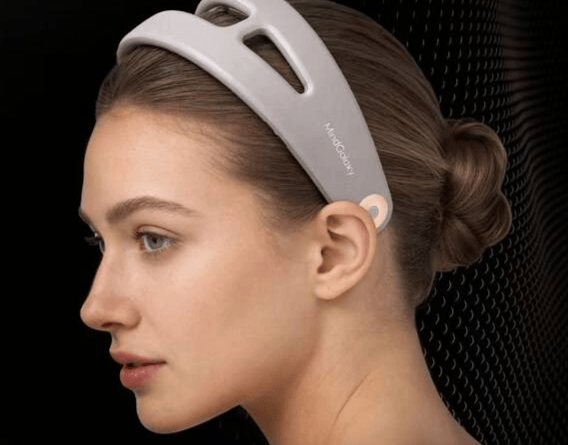
The wearable's form factor also breaks away from the traditional medical device paradigm. Featuring a minimalist silhouette and dopamine color palette, UnaBand is positioned as a tech accessory "meant to be seen, not hidden," directly challenging the long-standing consumer psychology of keeping menstrual care products invisible. In terms of pricing, the overseas retail price of UnaBand is $349 USD, with pre-orders starting in June. Previously, on May 13, the product landed on the crowdfunding platform Kickstarter, reaching its $100,000 goal within 2 hours of launch, validating market demand signals for this innovative category.
MindGalaxy simultaneously disclosed the technology roadmap for its next-generation product, UnaBand Pro. This upgraded model will introduce an EEG acquisition module to analyze the user's brain state in real-time and adaptively adjust microcurrent parameters, building a closed-loop system of EEG monitoring, stimulation feedback, and effect evaluation, moving from open-loop intervention to closed-loop neuromodulation.
As a core direction for next-generation human-computer interaction, the consumer-level implementation of BCI heavily relies on the synergistic advancement of microcurrent regulation chips, low-power Bluetooth transmission, and on-device signal processing capabilities. By packaging EEG signal acquisition, cloud data analysis, and personalized intervention plans into a wearable form, UnaBand essentially represents a productization downshift of BCI technology from medical rehabilitation to consumer health scenarios.
Founded in January 2026, MindGalaxy's core business focuses on the fields of intelligent rehabilitation and intelligent human-computer interaction. The choice to hold the launch in Palo Alto, home to Stanford University, marks the first time a Chinese BCI brand has released a consumer product at a global innovation hub, reflecting the company's intent to simultaneously establish a foothold in both the North American technology ecosystem and consumer market. As the integration of BCI technology and wearable devices accelerates, menstrual health management is shifting from traditional pharmaceutical pain relief and heat-based physical intervention to non-invasive active intervention based on neuromodulation, opening up a new application track for consumer-grade BCI.
This article is compiled by Wedoany. All AI citations must indicate the source as "Wedoany". If there is any infringement or other issues, please notify us promptly, and we will modify or delete it accordingly. Email: news@wedoany.com