en.Wedoany.com Reported - Following the loss of the BlueBird 7 satellite last month, AST SpaceMobile plans to launch three more Block 2 BlueBird satellites early Wednesday morning, using a SpaceX Falcon 9 rocket.
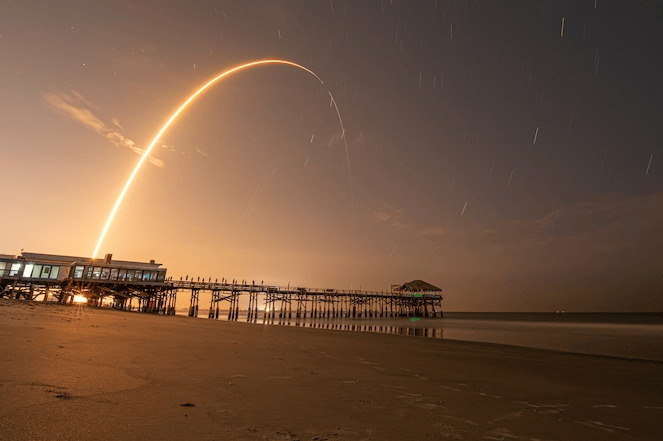
The launch is scheduled for 2:39 a.m. Eastern Time (6:39 UTC) from Launch Complex 40 at Cape Canaveral Space Force Station, with the rocket heading northeast after liftoff. The 45th Weather Squadron forecasts a 90% probability of favorable conditions at the launch pad, but there is a low to moderate risk of unacceptable weather in the area of the drone ship (SpaceX booster recovery vessel). Meteorologists are tracking potential disruptions from cumulus clouds and anvil clouds. Launch weather officials wrote on Tuesday: On both the primary and backup launch days, sufficient moisture may support residual clouds or anvil cloud tops from previous thunderstorms lingering near Cape Canaveral, with low concern for violating the cumulus cloud rule and anvil cloud rule.
SpaceX will use Falcon 9 first-stage booster tail number B1077, on its 29th flight, having previously flown missions including NASA's Crew-5, GPS III Space Vehicle 06, and CRS-28. About eight minutes after liftoff, B1077 will land on the drone ship "A Shortfall of Gravitas" in the Atlantic Ocean. If successful, this will be the 156th landing for that ship and the 625th booster recovery for SpaceX to date. The rocket's upper stage will begin deploying the three six-ton satellites into low Earth orbit approximately 54.5 minutes after liftoff, starting with BlueBird 8, with the other two satellites deploying at roughly five-minute intervals.
This launch comes about two months after the BlueBird 7 mission, which launched from Cape Canaveral using Blue Origin's New Glenn rocket. Although the company successfully recovered its first-stage booster "Never Tell Me the Odds," Blue Origin experienced an upper stage anomaly that prevented the satellite from reaching its intended orbit. AST SpaceMobile wrote in a financial filing with the U.S. Securities and Exchange Commission (SEC): Although the satellite separated from the launch vehicle and activated, its altitude was too low to sustain operations using its onboard propulsion technology, and it has therefore deorbited. Regarding the loss of the Block 2 BB7 satellite, the company expects to conduct a replacement launch under the applicable contract terms with the launch provider. The total loss associated with this event is expected to be consistent with the book value of this initial satellite, which the company estimates to be between $155 million and $160 million.
To date, the company has deployed the BlueWalker 3 test satellite and five Block 1 BlueBird satellites via SpaceX Falcon 9 rockets in September 2022 and September 2024, respectively. The first Block 2 satellite, BlueBird 6, was launched by India's LVM3 rocket. The U.S. Federal Communications Commission (FCC) has authorized AST SpaceMobile to deploy up to 248 satellites in low Earth orbit. Each Block 2 BlueBird satellite features a massive communications array covering approximately 2,400 square feet (223 square meters).
The company currently has agreements with nearly 60 mobile network operators worldwide, including AT&T, Verizon, and Vodafone, and its low Earth orbit constellation is designed to provide space-based broadband services to unmodified smartphones.
This article is compiled by Wedoany. All AI citations must indicate the source as "Wedoany". If there is any infringement or other issues, please notify us promptly, and we will modify or delete it accordingly. Email: news@wedoany.com