US FDA Rejects Novo Nordisk's $16.5B Plant, Korean CDMOs See Opportunity
en.Wedoany.com Reported - The U.S. Food and Drug Administration (FDA) has refused to approve a key manufacturing facility owned by Danish pharmaceutical company Novo Nordisk, and may impose an "Official Action Indicated" (OAI) sanction due to quality control violations. This setback not only affects Novo Nordisk itself, but also impacts the drug approval timelines of global biotechnology companies that use the facility.
Biotechnology industry sources revealed on August 12 that the core reason for Novo Nordisk's setback is that the manufacturing facility failed to meet cGMP (Current Good Manufacturing Practice) quality control standards, with rapid expansion overloading quality management capabilities. Driven by surging demand for Wegovy and Ozempic, Novo Nordisk had previously acquired CDMO giant Catalent for $16.5 billion through its holding company Novo Holdings, securing major fill-finish facilities including the Bloomington, Indiana plant, to alleviate supply shortages of diabetes and obesity drugs. During FDA inspections, the facility was cited for failing to maintain sterility during pharmaceutical manufacturing processes, posing risks of microbial and foreign particle contamination. Subsequent Corrective and Preventive Action (CAPA) plans submitted were also deemed inadequate, ultimately resulting in an OAI classification.
The facility issues have also affected outsourced client companies. Regeneron and Scholar Rock, among others, have received Complete Response Letters (CRLs) and face review delays due to the facility's failure to demonstrate commercial readiness, with drug approvals placed on hold.
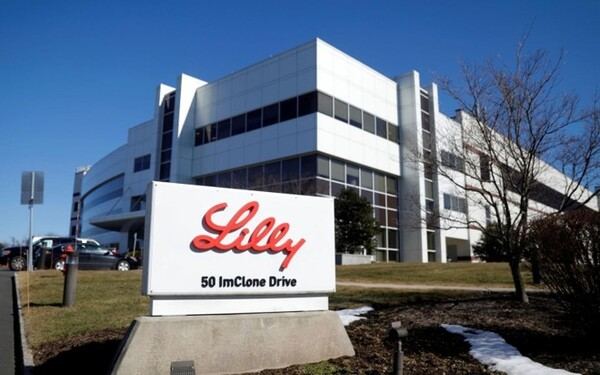
Korean biotechnology companies are establishing local production bases by acquiring U.S. plants, in response to U.S. sanctions against China (including the BIOSECURE Act), tariffs, and trade risks, while ensuring North American supply chain stability. Celltrion acquired Eli Lilly's cGMP biopharmaceutical plant in Branchburg, New Jersey, for approximately 460 billion KRW (about $330 million), and completed a 700 billion KRW investment including initial operational costs. Future plans include phased investments exceeding 1.4 trillion KRW, including expansion on idle land. The company established Celltrion Branchburg LLC, took over local professionals, and inherited contract manufacturing organization (CMO) contracts for Eli Lilly's existing products. The facility has now completed validation procedures and is operational, while being planned for expansion as a contract development and manufacturing organization (CDMO) base for other global pharmaceutical companies, as well as producing its own products for the U.S. market.
Samsung Biologics completed the acquisition of GSK's 60,000-liter drug substance manufacturing facility in Rockville, Maryland, for $280 million. By integrating the existing 785,000-liter bioplant in Songdo, Incheon, with the 60,000-liter Rockville facility, its total capacity reaches 845,000 liters, while taking over approximately 500 local workers to improve responsiveness to North American clients.
Lotte Biologics operates a U.S. local production base, centered on the 40,000-liter bioplant in Syracuse, New York, acquired from Bristol Myers Squibb. Beyond antibody drug production, the company has completed expansion of a dedicated antibody-drug conjugate (ADC) production facility to strengthen its competitiveness in winning next-generation biopharmaceutical CDMO projects.
The FDA's sanctions on manufacturing facilities and related approval disruptions present a convergence of short-term risks and long-term opportunities for the Korean pharmaceutical and biotechnology industry. As large pharmaceutical companies recognize the single-source risk of relying on specific CDMOs, consultations are expected to flow to companies with large-scale production capabilities and compliance track records such as Samsung Biologics, Lotte Biologics, and ST Pharm. Companies like Regeneron and Scholar Rock, whose approvals have been delayed due to facility issues, will also immediately seek alternative production sites, further driving Korean CDMO orders.
If Novo Nordisk's supply bottlenecks persist, Korean companies developing peptide-based new drugs or glucagon-like peptide-1 (GLP-1) follow-on biosimilars—such as Yuhan, Hanmi Pharmaceutical, Daewoong Pharmaceutical, and Phetron—may benefit from favorable conditions, including securing accelerated review from U.S. regulators or early market entry. Meanwhile, as the FDA tightens inspection standards for pharmaceutical quality systems and manufacturing facilities, Korean developers preparing to enter the U.S. market are expected to face stricter Process Validation and Data Integrity requirements.
Novo Nordisk is expected to temporarily shut down production lines at the Bloomington plant and reinvest in external consulting and facilities to address FDA concerns, but re-inspection and approval restoration will take at least 6 months to 1 year or longer, and supply chain pressures may persist in the short term. In the past, pharmaceutical companies primarily considered unit cost and economies of scale when selecting CDMOs; going forward, "regulatory compliance history" is expected to become the highest evaluation criterion, and the market will further consolidate toward large CDMOs with strong track records. The Korean biotechnology industry is treating this incident as a lesson, actively attracting global CDMO orders in the short term, while companies with own manufacturing facilities are re-examining their systems for responding to FDA inspections from scratch. In an era of higher regulatory barriers, Korean companies that have demonstrated quality competitiveness are expected to become core partners in the global value chain.