China's Pinglu Canal Opens to Navigation: Direct River-Sea Access Saves 5 Billion Yuan Annually
en.Wedoany.com Reported - On September 16, the Pinglu Canal, the first canal project connecting rivers to the sea coordinated at the national level since the founding of New China, was completed and opened to navigation today. Construction of the canal began on August 28, 2022, with a total investment of approximately 72.7 billion yuan. It is a backbone project of the New Western Land-Sea Corridor and a linking project that organically connects with the Belt and Road Initiative.
After the canal opens to navigation, goods from the southwestern region shipped to the sea via the canal will have their inland waterway voyage shortened by more than 560 kilometers compared with traditional routes, and the voyage to major ASEAN ports will be substantially shortened. Comprehensive logistics costs will be reduced by 18%–30%, saving society more than 5 billion yuan in transportation costs each year. This will effectively lower enterprise operating costs, facilitate domestic and international trade flows, and drive income growth and prosperity for the people. It will comprehensively reshape the logistics corridor pattern and economic geography of the southwestern region, injecting strong momentum into regional high-quality development.
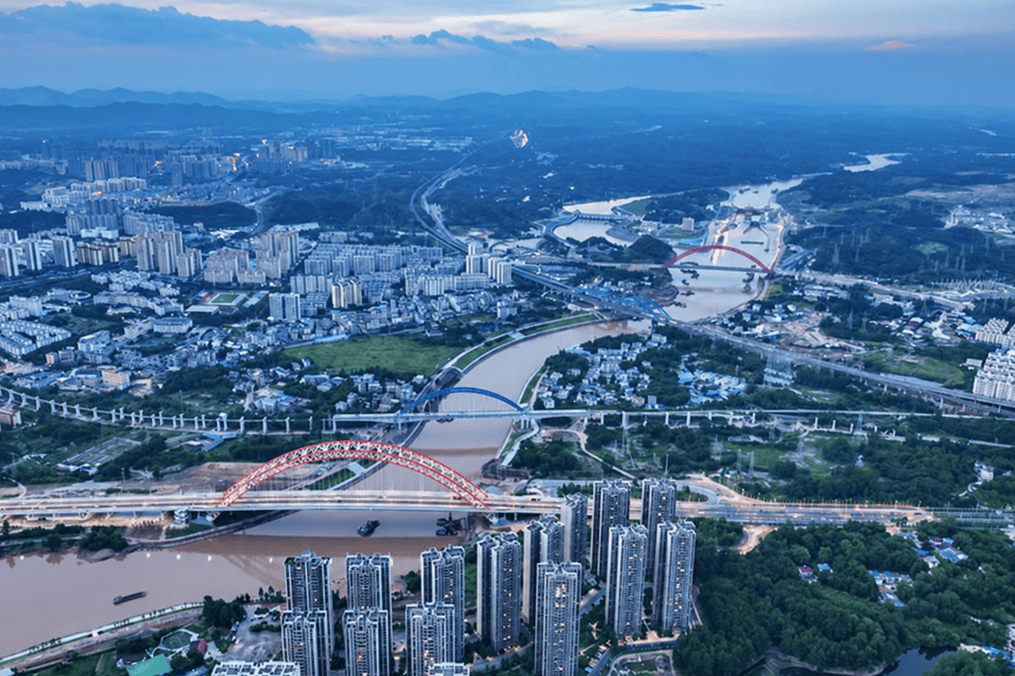
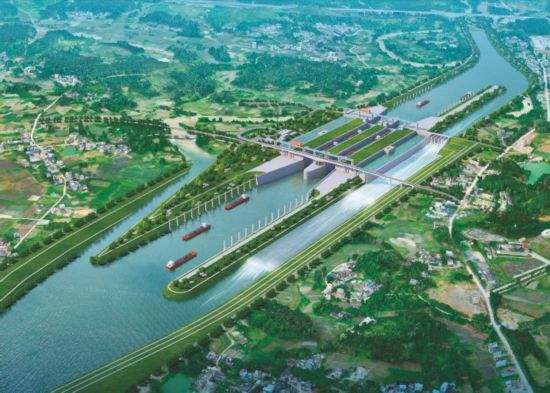
August 19, the urban area of Qinzhou City, Guangxi, and the Pinglu Canal flowing through it.
Greatly reducing cargo transshipment and handling links
The Pinglu Canal has a total length of 134.2 kilometers. It starts in the north at Pingtang River Mouth in the Xijin Reservoir Area of Hengzhou City, Nanning, and runs south through Luwu Town, Lingshan County, Qinzhou, following the Qinjiang River directly to the Beibu Gulf. It is built to inland waterway Class I standards and can accommodate 5,000-tonne vessels.
Three major cascade hubs—Madao, Qishi, and Qingnian—have been built along the entire canal. From the starting point to the endpoint, the water level drop reaches 65 meters. Among them, the Madao Hub set two world records: the water-saving ship lock with the largest water level drop and the largest inland water-saving ship lock.
The Pinglu Canal is bounded by the vertical projection line of the southern edge of the Qinqiang Bridge deck of the G75 Lanzhou-Haikou Expressway. North of this line is inland water area, and south is sea area. The inland river section of the canal, from the starting point to the river-sea boundary—that is, from Pingtang River Mouth in Hengzhou City, Nanning, to the Qinqiang Bridge of the G75 Lanzhou-Haikou Expressway—is tentatively designated as "Inland Waterway Class B Navigation Area."
In the past, inland river vessels could not directly enter the sea and had to transfer via wharves. The river-sea junction area of the Pinglu Canal at Qinzhou Bay has been designated as China's first "Equivalent Class A Navigation Area." Qualified inland river vessels may enter sea areas after endorsement on their inspection certificates, without the need for transshipment.
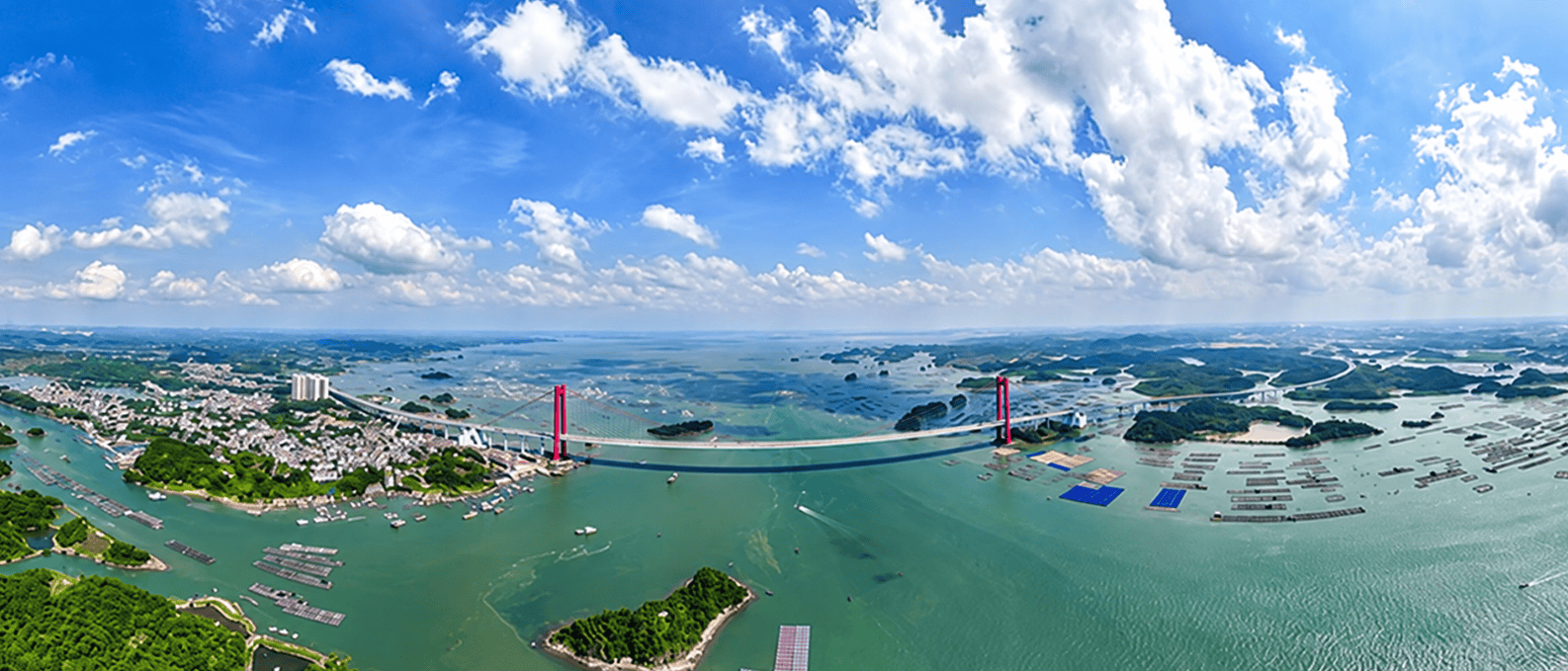
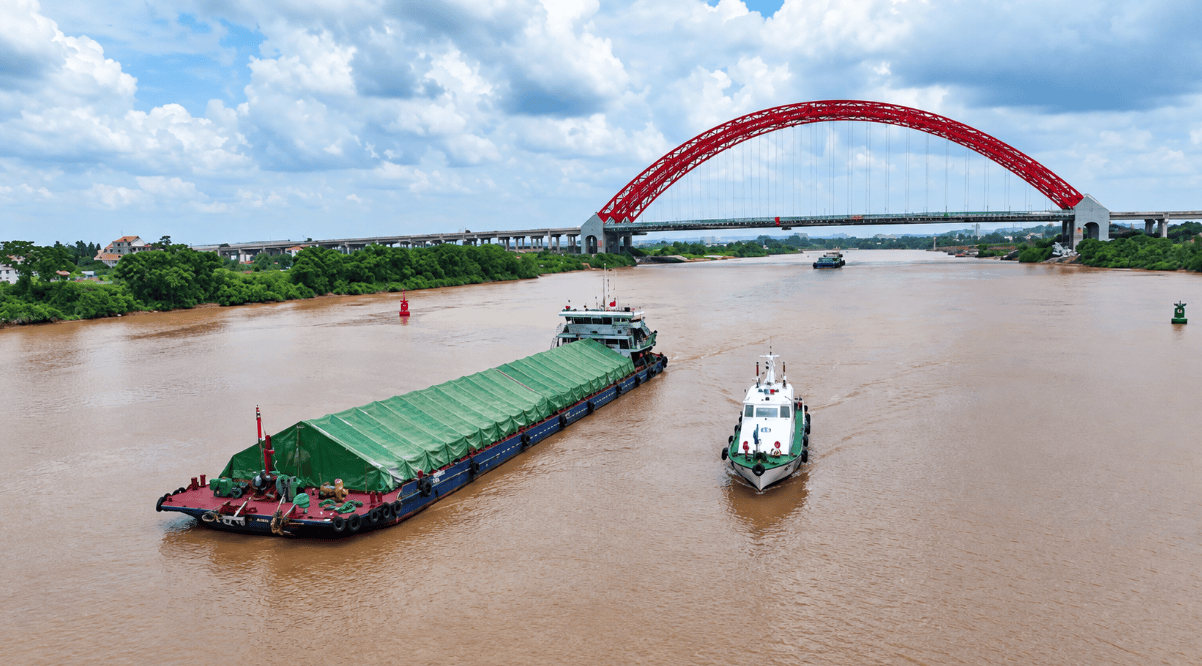
August 20, the Longmen Bridge near the sea outlet of the Pinglu Canal.
Inland river vessels entering Qinzhou Port wharves via the Pinglu Canal apply unified standards throughout the entire journey, can legally berth at seaport wharves, and can meet the transportation needs of multiple categories of goods. The Maowei Sea anchorage adjacent to the sea outlet is being gradually improved. Once completed, it will be able to accommodate up to 78 inland river vessels of 5,000 tonnes and below at the same time. Sea-going vessels and international voyage vessels meeting regulatory requirements can directly enter the Pinglu Canal from the Beibu Gulf. The temporary opening of the foreign trade wharf port area of Nanning Port has been approved, and the Guangxi Maritime Safety Administration will lead the operation of the joint inspection mechanism of port units.
The realization of direct river-sea access will greatly reduce cargo transshipment and handling links, significantly lower the logistics costs of the New Western Land-Sea Corridor, and truly achieve seamless connection between the inland rivers of the Xijiang River and the seaports of the Beibu Gulf.
At present, inland river and coastal navigation management is mainly based on the Regulations of the People's Republic of China on Inland River Traffic Safety Administration and the Maritime Traffic Safety Law of the People's Republic of China. These regulations are difficult to fully adapt to the particularity of the Pinglu Canal in "connecting rivers to the sea." In response to the particularity of inland river vessels and sea-going vessels operating in the same waters, the Maritime Safety Administration of the People's Republic of China issued the Provisions on the Administration of Navigation Safety of the Pinglu Canal, establishing dedicated "traffic rules" for this entirely new waterway. The provisions took effect officially on September 15.
Comprehensively meeting needs such as vessel berthing and material supply
The Pinglu Canal has 2 comprehensive waterborne service areas and 6 specialized anchorages arranged along its entire route, which can comprehensively meet needs such as vessel berthing, material supply, emergency support, and crew rest. On this basis, China's first full-lifecycle smart canal is being built, supported by a full-domain digital twin smart platform. The nation's first integrated smart dispatch platform for river, sea, and inland waterway transport in Guangxi has been fully launched for trial operation, realizing river-sea-inland coordinated dispatch featuring "one declaration for passage along the entire route, algorithm-based scheduling for full-process efficiency, and one-network connectivity with seamless linkage," providing solid support for improving vessel passage efficiency.
In addition, benefiting the people runs through the entire process of canal engineering construction. Since the project started, it has absorbed more than 70,000 people to participate in project construction and distributed approximately 2.6 billion yuan in labor remuneration under the work-relief program. In parallel, 17 centralized resettlement new areas for the canal have been built, 6 primary schools have been rebuilt or newly constructed, and 1,089 new school seats have been added. 72,000 meters of tap water pipeline networks have been laid, solving drinking water difficulties for tens of thousands of people.
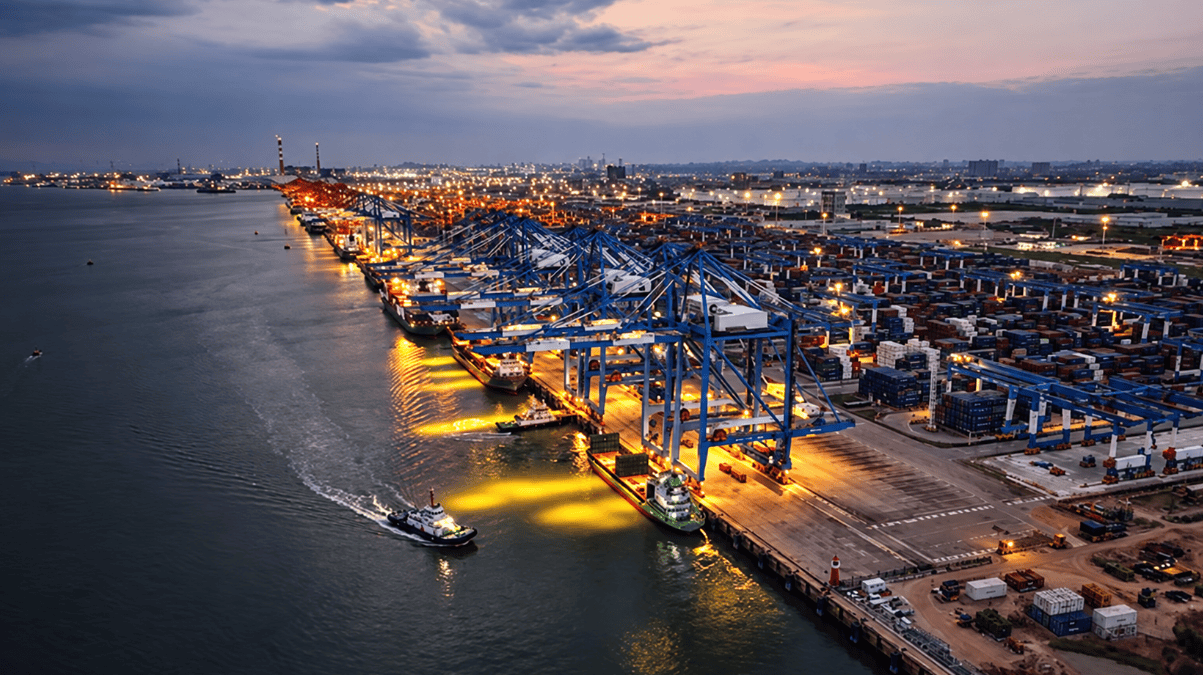
September 3, Qinzhou Port of Beibu Gulf Port, photographed in Qinzhou City, Guangxi.
Stimulating new momentum for the development of the marine economy
Zhang Zhiwen, Deputy Secretary-General of the People's Government of Guangxi Zhuang Autonomous Region and spokesperson of the autonomous region government, said that next, the construction of the Pinglu Canal Economic Belt will be advanced to high standards, the modern transportation and logistics network driven by the Pinglu Canal will be accelerated and improved, and "hard facilities" such as wharves, ports, ship locks, and dedicated railway branch lines will be built in a coordinated manner. Blockages and bottlenecks in external connections along the canal will be opened up, and a multimodal transport network will be built. A smart logistics information platform of the autonomous region will be established to promote "soft services" such as integrated river-sea monitoring, dispatch command, intelligent control, and information services, covering more than 95% of logistics service scenarios along the Pinglu Canal and improving the efficiency and level of logistics organization.
Along the canal, pillar industries suitable for port and water locations—such as nonferrous metals and key metal materials, modern green chemicals, artificial intelligence, and next-generation information technology—will be laid out. Emerging industries such as new materials and the low-altitude economy will be cultivated at an accelerated pace. Port-adjacent parks along the canal will be built according to local conditions, and industrial clusters with upstream-downstream supporting facilities and coordination among large, medium, and small enterprises will be formed.
At the same time, development linkages will be strengthened with the eastern coastal regions and provinces along the New Western Land-Sea Corridor. An industrial collaboration mechanism featuring complementary advantages and co-construction and sharing will be established, cooperation in building "enclave" parks will be promoted, cross-regional logistics platforms will be made larger and stronger, and overseas goods will be efficiently organized to enter China via Guangxi while domestic goods go to sea from Guangxi. Closely focusing on products in short supply in the ASEAN market and demand for consumption upgrading, a supply chain cooperation model of "overseas raw materials + Guangxi deep processing + domestic and international markets" will be built, forming an important node and hub that smooths the domestic and international dual circulation.
Related Products

ERW Welded Pipe (Black Pipe and Hot-dip Galvanized Steel Pipe)
Handan Zhengda Steel Pipe Co., Ltd.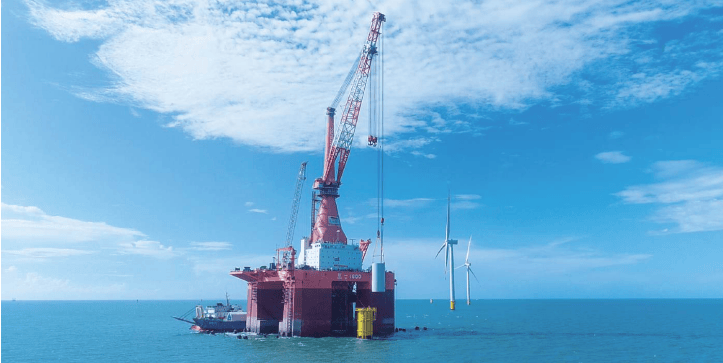
"Shunyi 1600" Deep-submerging Bottom-sitting Multi-functional Wind Power Engineering Vessel
Zhengli Offshore Engineering Co., Ltd.

Pantograph-Catenary Comprehensive Detection Device (1C)
CHENGDU TANGYUAN ELECTRIC CO., LTD.


Wheel and Track Technology Business
Beijing Research & Design Institute of Rubber Industry Co., Ltd.