Vanderbilt University and Others Develop Lithium-Sulfur Battery That Stores More Than 1,700 Watt-Hours per Kilogram of Sulfur
en.Wedoany.com Reported - A research team from Vanderbilt University and the University of Maryland in the United States has developed a new lithium-sulfur battery chemistry that introduces chlorine to enable sulfur atoms to exchange one additional electron during charge and discharge, increasing sulfur's charge storage capacity by about 58% and raising the average operating voltage from about 2.05 volts to 2.54 volts.
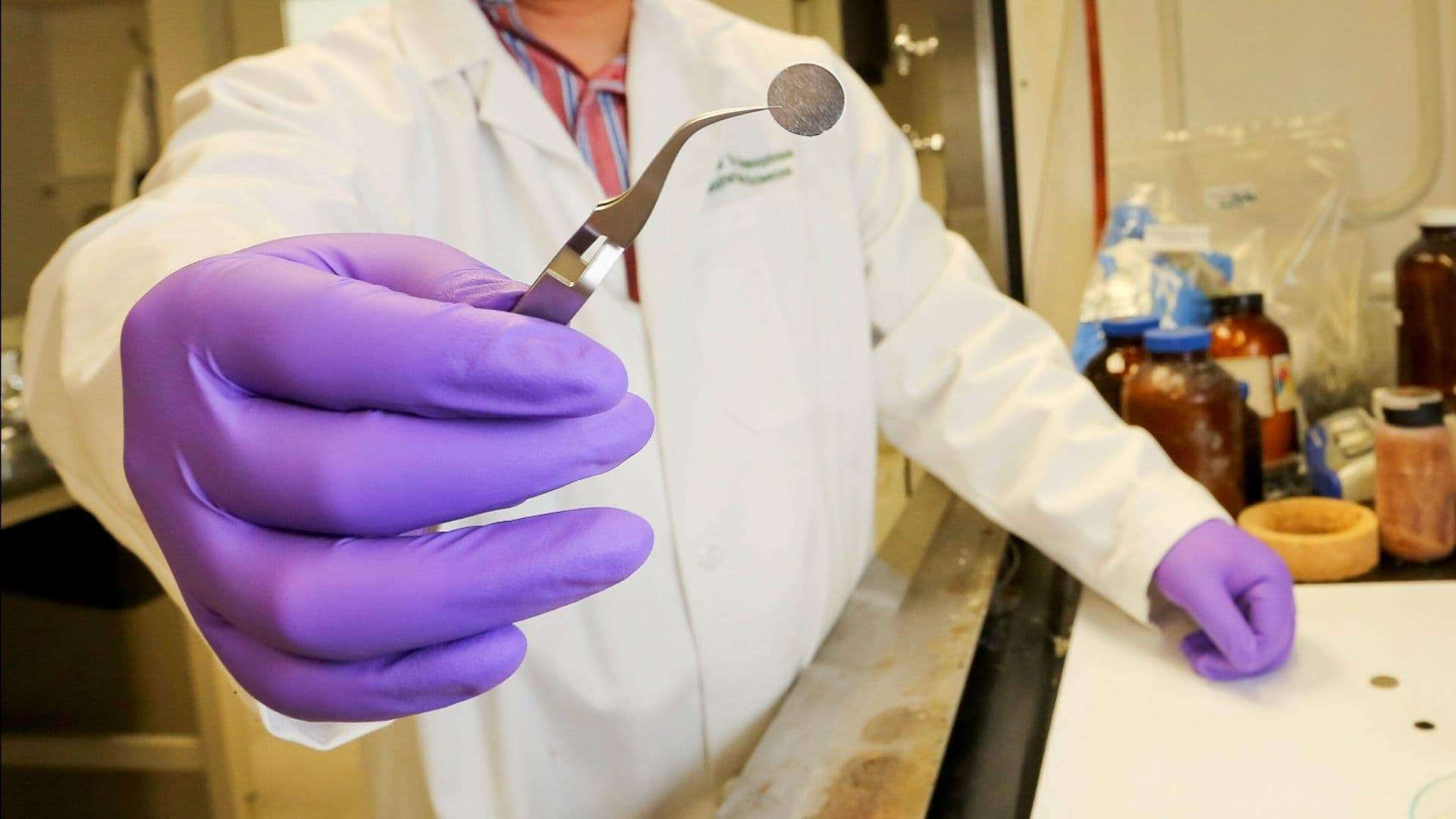
Sulfur is abundant and relatively low-cost, and its gravimetric charge storage capacity is far higher than that of materials commonly used in lithium-ion battery cathodes, making it one of the alternative options for cathode materials. However, conventional lithium-sulfur chemistry operates at a relatively low voltage, leaving part of sulfur's redox capability untapped.
De-en Jiang, H. Eugene McBrayer Chair in Chemical Engineering and Professor of Chemistry at Vanderbilt University, said the conventional lithium-sulfur battery approach leaves part of sulfur's redox capability idle, and the research team hoped to expand sulfur's redox capability to store more energy. In conventional lithium-sulfur batteries, each sulfur atom exchanges only two electrons during charge and discharge; after the introduction of chlorine, this process is extended, allowing sulfur to exchange a third electron.
The additional reaction occurs at a higher voltage, and the charge storage capacity and voltage increase in tandem, with the experimental cell able to store more than 1,700 watt-hours of energy per kilogram of sulfur.
To make this additional reaction reversible, another problem must be solved: during charging, chlorine must interact with sulfur, while the resulting sulfur-chlorine compound must not migrate within the battery and react with the lithium metal electrode. The team used molecular simulations to examine the behavior of lithium ions and chloride ions in different electrolytes, and on that basis designed an electrolyte that keeps chlorine participating in the sulfur reaction, and selected an electrolyte in which a sulfur-chlorine reaction product is not readily soluble, keeping that substance inside the cathode so that the reaction can be reversed during discharge. Multiple spectroscopic techniques subsequently confirmed that sulfur repeatedly enters this newly accessed chemical state during charge and discharge.
The researchers also built a small single-layer pouch cell to verify the chemistry's performance beyond the coin cells commonly used in early battery research. The pouch cell retained 78% of its capacity after 100 charge-discharge cycles.
This technology is still in the early validation stage; the prototype uses a lithium metal electrode, the amount of sulfur used is relatively limited, and the amount of electrolyte used is also greater than the ideal level for commercial batteries. After taking major battery components into account rather than looking only at the electrodes, the researchers estimate that the approach can achieve a stack-level specific energy of 477 watt-hours per kilogram, about 37% higher than the conventional lithium-sulfur system used as a control in the study.
The related research findings were published in the journal Nature Energy.
Related Products


Environmentally Friendly Flame-retardant PVC Double-layer Insulated Wire
Sichuan Chndo Cable Co., Ltd.
Inductive Power Harvesting Self-Powered Device - Safuneng
SELF ENERGY TECHNOLOGY (SHENZHEN) CO., LTD.
Prefabricated Houses and Electrical Energy Boxes
Chengdu Ruilong Machinery Manufacturing Co., Ltd.


Microcomputer Protection and Substation Automation
Beijing Agent Devote Power Technology Development Co., Ltd.