South Korea's Samsung Heavy Industries Jointly Develops Nuclear-Powered LNG Carrier Demonstration Project with Three Parties
en.Wedoany.com Reported - On November 23, South Korea's Samsung Heavy Industries, Tesser Atomics of the United States, the Department of Marine Operations and Civil Engineering at the Norwegian University of Science and Technology (NTNU), and DNV signed a memorandum of cooperation in Norway to jointly develop a nuclear-powered liquefied natural gas (LNG) carrier demonstration project. The project plans to design a nuclear-powered carrier employing fluoride-salt-cooled reactor technology, with a planned operating route connecting LNG receiving and export terminals in the United States and Europe.
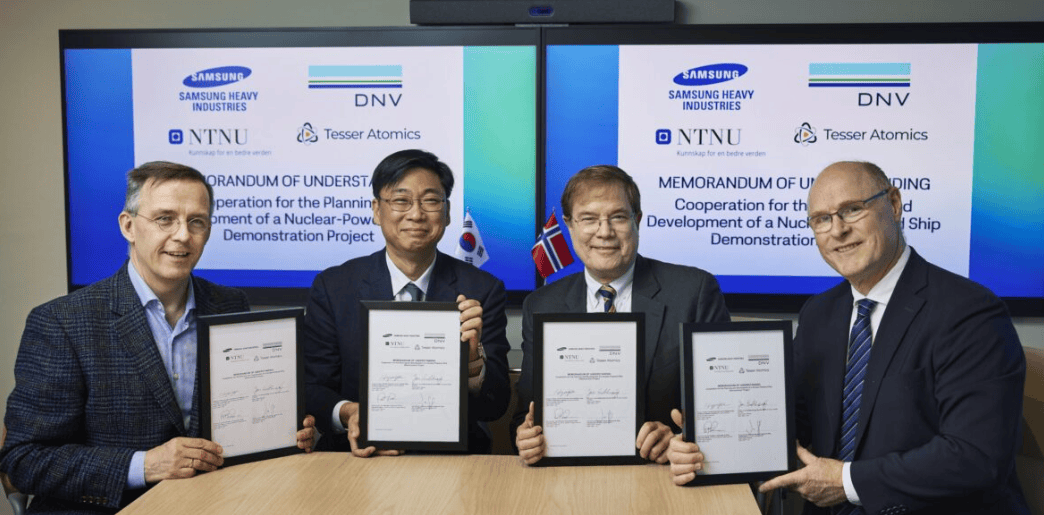
Under the cooperation arrangement, the four parties will first formulate a technology roadmap for the demonstration vessel, defining the ship concept design, nuclear power system integration, safety assessment, and approval plans, and studying the commercialization implementation path from design and construction to commissioning and operation.
The demonstration vessel is planned to integrate the marine fluoride-salt-cooled reactor developed by Tesser Atomics. Unlike traditional fuel-powered and conventional gas-powered vessels, this scheme attempts to use a nuclear reactor as the power source for a commercial carrier, exploring a new energy technology pathway for large ocean-going carriers through the integration of the ship propulsion system with the nuclear power unit.
The four parties will advance the research and development work according to their respective areas of expertise. Samsung Heavy Industries will be responsible for ship concept design, marine engineering integration, and construction feasibility studies, focusing on resolving compatibility issues between the nuclear power unit and the hull structure and propulsion system; Tesser Atomics will be responsible for reactor technology, nuclear power unit development, and reactor-related safety and licensing work.
DNV will undertake maritime safety, risk assessment, and classification society technical support, including hazard identification, development of a safety assessment framework, and planning of classification review and verification routes. NTNU will be responsible for coordinating scientific research work, research funding applications, and project cooperation organization, and will participate in feasibility studies, simulation modeling, and experimental verification.
The project will also conduct collaborative research with the SFI SAINT nuclear-powered ship research center led by NTNU, providing reference for technical verification of nuclear-powered commercial vessels. SFI SAINT focuses on research into the technical applications and safety issues of nuclear-powered ships, and this LNG carrier demonstration project will become one of its multiple nuclear-powered ship demonstration studies.
Samsung Heavy Industries stated that the company has previously accumulated relevant technology and experience in the field of marine small modular reactors, and this cooperation will combine the expertise of shipbuilding, nuclear technology, classification society safety, and research institutions to advance research on the commercial application of nuclear-powered merchant ships.
In addition to LNG carriers, the cooperating parties also hope to evaluate the possibility of extending the relevant design to container ships and other types of merchant vessels.
Related Products

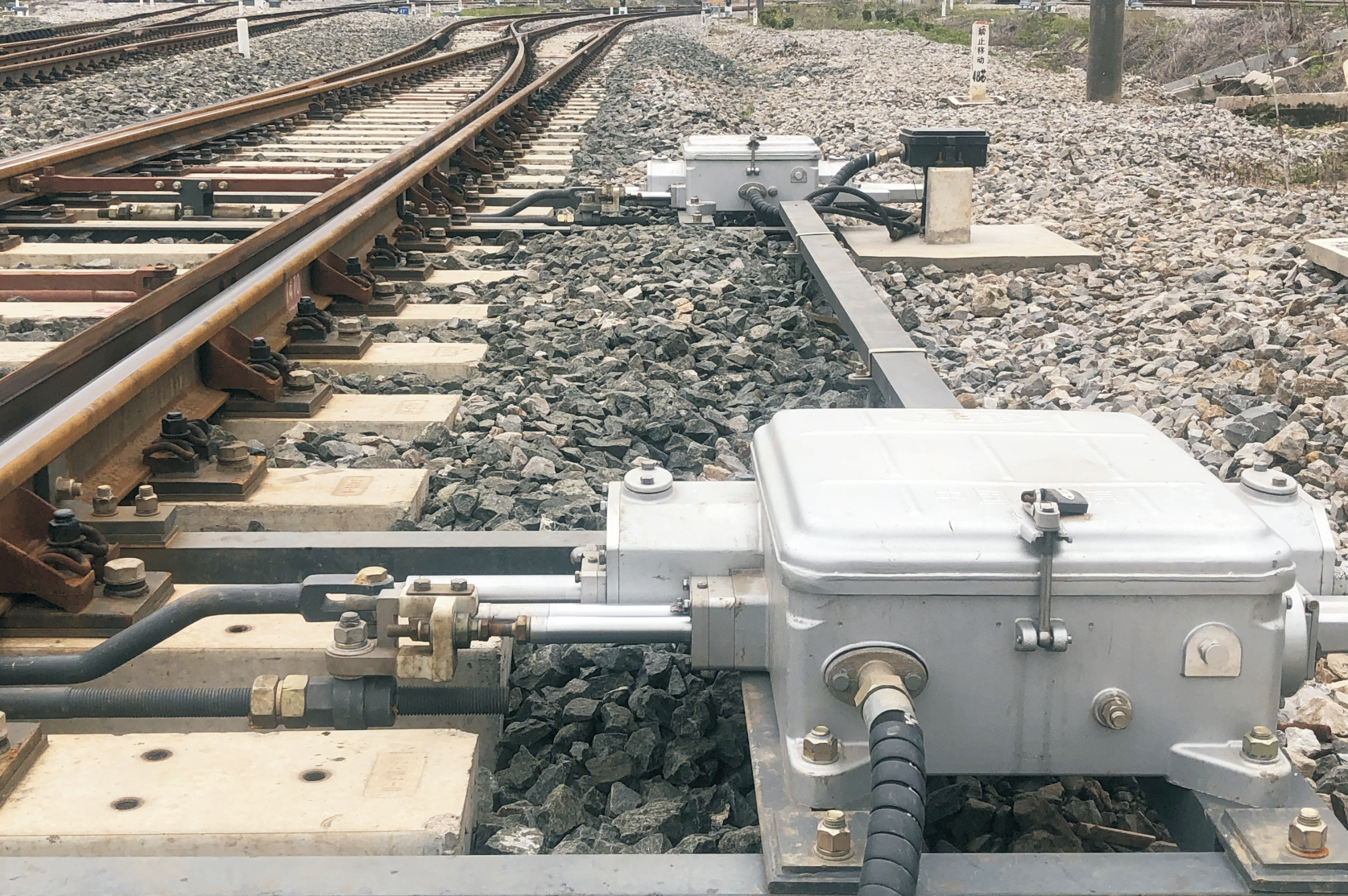
ZY(J)7(M) Sealed Type Electro-Hydraulic Turnout Machine
TAIYUAN CR JINGFENG EQUIPMENT TECHNOLOGY CO., LTD.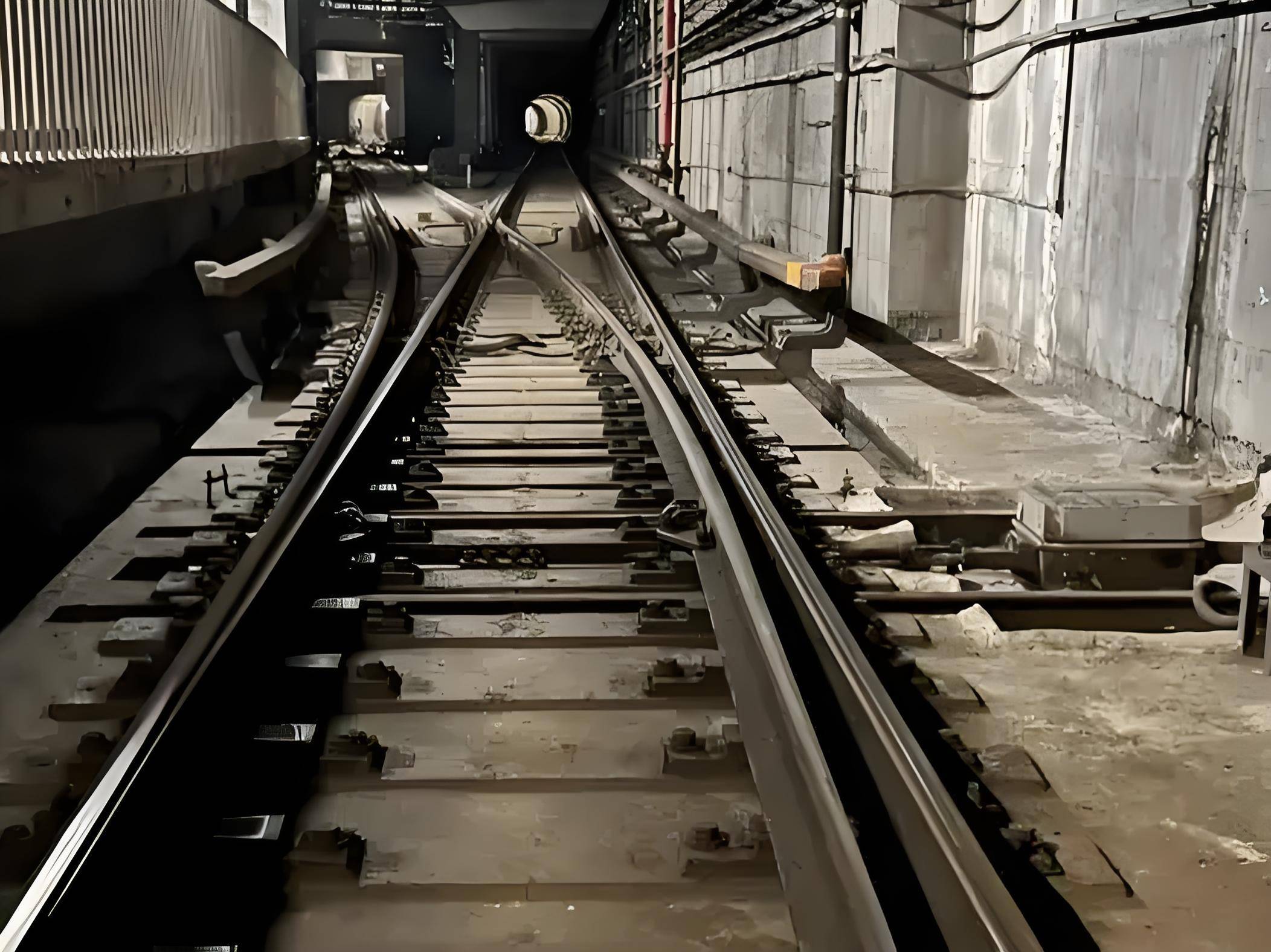



3m intelligent buoy combining navigation safety and real-time marine monitoring integrated navigation and marine monitoring system for real-time maritime data
Chengdu Dixin Technology Co., Ltd.