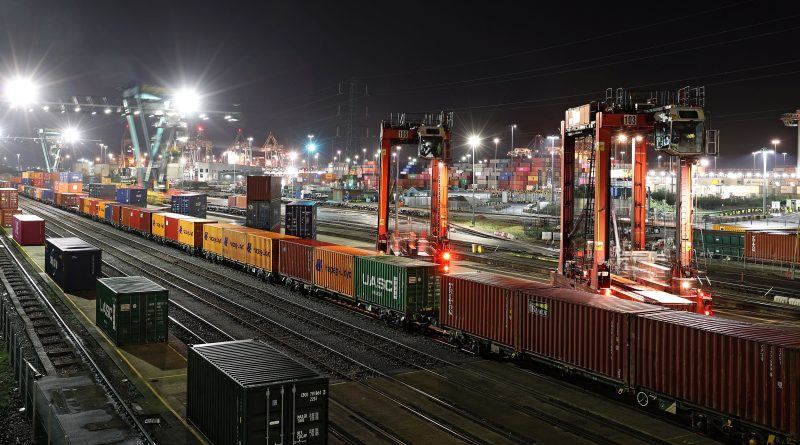
Wedoany.com Report-Oct. 30, A China-Europe freight train carrying daily necessities and electronic components departed from Horgos Railway Port in northwest China’s Xinjiang Uygur Autonomous Region for Malaszewicze, Poland, earlier this week. This brings the number of such trains passing through the port in 2025 to over 8,000, reaching the milestone 40 days ahead of the same point in 2024.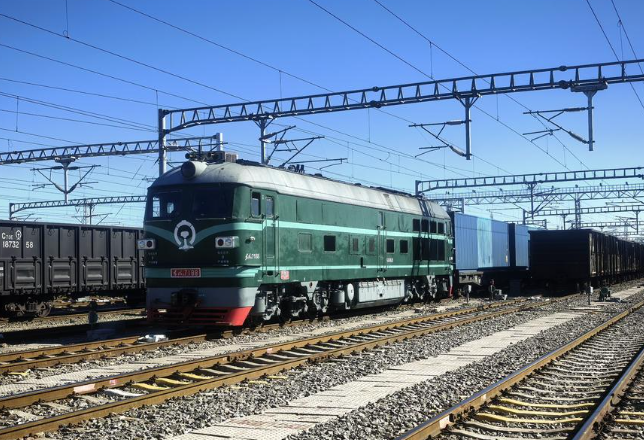
Horgos Customs reported on Wednesday that freight train operations at the port have seen sustained growth, with a daily average of more than 27 trains since the start of 2025. The trains increasingly transport goods from China’s manufacturing hubs, including the Yangtze River Delta and Pearl River Delta, to markets in Central Asia and Europe.
Li Qing, business manager of a local international freight forwarding company, said: “The China-Europe (Central Asia) rail service offers distinct advantages, including faster transit than sea freight, lower costs than air transport and stable scheduling, earning strong recognition from clients.” Li added that his company has handled over 2,000 trains this year, a 20 percent increase compared with last year, with cargo volume rising 23 percent to 5 million tonnes.
Efficiency at Horgos Port has improved significantly. Import cargo clearance has been shortened from two to three days to within 16 hours, while export processing has been reduced from six hours to just one hour.
Since the service began, more than 50,000 China-Europe (Central Asia) freight trains have passed through Horgos Port. They operate on 90 routes and reach 46 cities and regions across 18 countries, connecting Chinese production centers with international markets efficiently and reliably.
The expanding operations reflect the growing demand for cross-border rail logistics, providing a balance between speed, cost, and reliability for international trade. The Horgos Port’s performance highlights its role as a key hub in the China-Europe rail network, supporting trade flows for essential goods and industrial components while enhancing regional connectivity.
The continued growth of freight services also supports broader supply chain efficiency, helping businesses access global markets more effectively and facilitating smoother import and export processes. The developments underscore the importance of modern rail infrastructure in meeting rising trade demand between China, Central Asia, and Europe.