
Astronomers from the University of Warwick, in collaboration with Spanish institutions, are exploring a new way to repurpose traditional astronomical observation tools as climate sensors to track changes in Earth's atmosphere amid global warming. Starlight passing through the atmosphere interacts with particles in gases and dust, creating unique “Earth atmosphere lines” that were once considered interference for astronomers but are now emerging as a new tool for monitoring Earth's climate.
The Astroclimes algorithm, developed by the University of Warwick, uses absorption lines left by atmospheric molecules in stellar spectra to measure the abundance of nighttime greenhouse gases such as carbon dioxide, methane, and water vapor. Marcelo Aron Feitzner Kenig, the algorithm's developer, said: “Monitoring greenhouse gas abundance is crucial for quantifying their impact on global warming. The Astroclimes algorithm aims to fill the gap in nighttime greenhouse gas measurements, complementing existing daytime solar spectroscopy methods.”
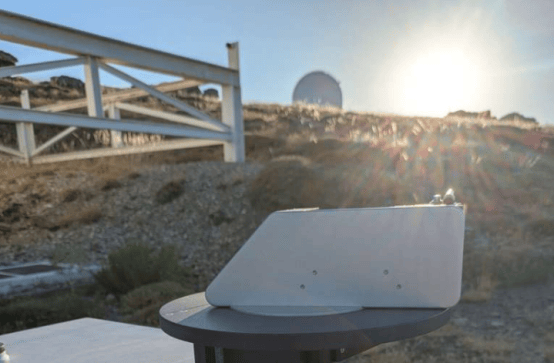
In July this year, the Calar Alto Observatory in Spain, in partnership with the University of Warwick, the University of Almería, and the Spanish National Meteorological Agency, conducted an observation campaign. The campaign aimed to demonstrate the unique advantages of combining solar measurements (daytime) with stellar measurements (nighttime, using the Astroclimes algorithm) to study the carbon cycle, the role of greenhouse gases in global warming, and to strengthen observational systems for these gases. During the observations, daytime spectra were measured using portable Fourier transform infrared spectrometers, while nighttime measurements utilized the CARMENES spectrograph on the observatory's 3.5-meter telescope for stellar light analysis.
Marcelo Aron further noted: “If successfully calibrated with COCCON measurements, Astroclimes could build an entirely new network for measuring greenhouse gas abundance, providing nighttime measurement supplements to existing networks.” Additionally, the COCCON-Spain National Network is working to address gaps in atmospheric greenhouse gas observations in Spain through a nationwide network of measurement stations, enhancing understanding of greenhouse gas sources and sinks, and providing a basis for developing strategies for climate change mitigation and adaptation.
Observatory Director Jesús Aceituno said: “Calar Alto Observatory is not only committed to energy sustainability; its greenhouse gas detection work also shows that observatories can serve as important platforms for monitoring Earth's climate.”