
Researchers at the U.S. Department of Energy’s Oak Ridge National Laboratory (ORNL) are developing faster medium-voltage circuit breakers to support and protect the modern grid, particularly to enable widespread adoption of direct current (DC) in power systems.
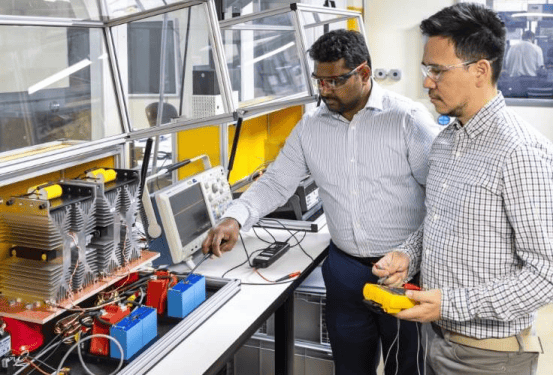
Lead researcher Prasad Kandula noted that the lack of DC medium-voltage circuit breakers has long been a major barrier to power delivery flexibility. The new medium-voltage circuit breaker can handle higher levels of DC power at a lower cost, helping to reduce electricity costs and expand the capacity of the U.S. grid.
Circuit breakers are critical safety devices in the power grid, automatically interrupting current during abnormal conditions or faults to prevent fires or outages. Traditional circuit breakers are designed for alternating current (AC), but DC’s unidirectional flow makes it difficult for conventional mechanical switches to interrupt quickly. ORNL researchers are designing and scaling a new type of semiconductor-based circuit breaker that operates 100 times faster than mechanical switches, enabling broader application of DC in the grid.
DC systems are increasingly attractive to energy system designers due to their efficiency, flexibility, and compatibility with modern energy sources and loads. They can provide more cost-effective power to energy-intensive projects such as AI data centers while reducing energy losses during transmission. Medium-voltage circuit breakers are essential for realizing DC distribution, and semiconductor circuit breakers offer speed and greater safety, significantly reducing risks to safety and wildfires.
However, semiconductor circuit breakers have previously been too expensive to compete with AC mechanical circuit breakers, limiting the expansion of DC grids. The ORNL team selected a cost-effective semiconductor—thyristors—and designed an external circuit to force current reduction. They built and tested a circuit breaker prototype at the Grid Research Innovation and Development Center, capable of interrupting 1400 volts in less than 50 microseconds—four to six times faster than previous thyristor demonstrations.
To demonstrate scalability to higher voltages, the researchers connected circuit breakers in series and developed solutions to address challenges such as voltage distribution and fast response time. They tested a series of breakers up to 1800 volts and are working to scale the voltage to 10,000 volts to meet the larger energy demands of future DC grids.
The project is part of ORNL’s broader effort to develop a family of stackable medium-voltage modules to expand new power applications in U.S. transportation, manufacturing, and data centers. The project is funded by the U.S. Department of Energy’s Office of Electricity, with other researchers involved including Marcio Kimpara and Elvey Andrade.