
In an era when the public is generally accustomed to recycling household waste, the recycling of building materials and the disassembly and reassembly of entire buildings are becoming new focal points in green manufacturing.
Formula 1 (F1) racing is often regarded as an innovation laboratory, and Red Bull Racing's “Pit Box”—the F1Holzhaus (meaning “wooden house”)—serves as a typical example. It made its debut at the 2019 Spanish Grand Prix and has since become the team's “home” in Europe. Before each Grand Prix, 14 workers can assemble this 1,221-square-meter pit box in just 32 hours, and it can be dismantled in less than a day. This structure reflects a shift in architectural philosophy toward adaptability, transformability, and reusability for sustainability.
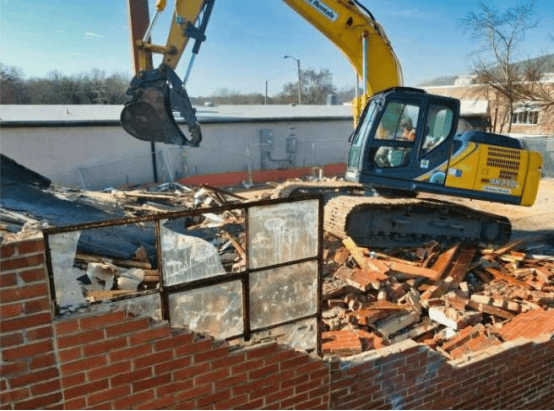
The construction industry is one of the world's largest producers of waste, generating approximately 2.2 billion tons of construction waste annually worldwide. In Europe, the construction sector produces about 450 million tons of waste, accounting for 40% of the continent's total waste. More than 90% of this construction waste comes from demolition, while waste from on-site remnants, damaged materials, and manufacturing processes cannot be ignored. For example, wooden beams in buildings typically account for only 20% of the original timber, with the remaining 80% wasted as sawdust, scraps, etc. This highlights the limitations of the linear model (produce-use-dispose).
To address this issue, the circular economy proposes detachable design solutions, replacing demolition with systematic disassembly to enable component recycling and reuse. This shift from one-time use to a “reduce-reuse-recycle” mindset is taking root in the construction sector through global initiatives. Conscious design based on modularity and standardization, combined with carefully designed reversible joints and digital tools such as “material passports,” enables non-destructive disassembly and simplifies future material reuse.
In the transition from linear to circular models, transforming waste into resources is crucial. This means moving from the traditional “cascading” recycling model to “upcycling,” giving discarded materials new life as higher-value or more practical items.
Currently, specific solutions have applied upcycling principles to the construction industry. Spanish designer Lucas Muñoz used construction waste to create furniture and lighting for the MO de Movimiento restaurant in Madrid and CoLab de Sancal. Spain's PRISMA project uses sawmill waste to manufacture construction blocks, preventing the waste from being incinerated or ground into low-value particleboard. The ecological ark in Taiwan features exterior walls made from PET plastic soft drink bottles and can be completely disassembled and reassembled.
Furthermore, circular management based on ancestral knowledge also demonstrates strong vitality. During the San Fermín Festival in Pamplona, the 848-meter-long running track fences are made from wild pine wood. After the festival, they are dismantled and stored, then reassembled the following year, with less than 2% of the materials replaced annually. Such cases point the way toward more efficient and sustainable resource utilization in the construction industry, pushing green manufacturing to new heights.