
Engineers at the University of Maine are developing a new method to more accurately predict the strength of lightweight 3D-printed objects. The research, conducted by the university’s Advanced Structures and Composites Center (ASCC), aims to enable designers to control the strength of nearly all plastic components, resulting in stronger and more reliable parts.
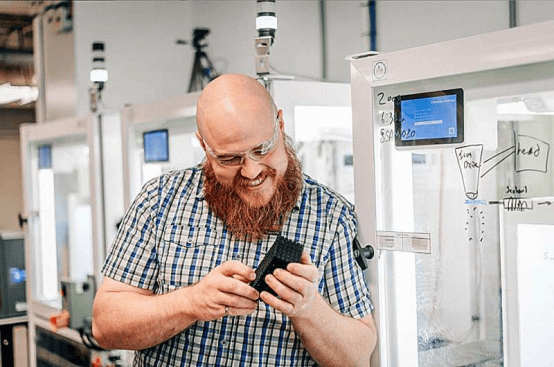
The research team consists of ASCC research engineer Philip Bean, mechanical engineering professor Senthil Vel, and civil engineering professor Roberto Lopez-Anido. The results were published in the journal Progressive Additive Manufacturing. The study combines advanced computer modeling with physical experiments to gain a more comprehensive understanding of how these components behave under stress.
The team focused on gyroid infill structures—a complex and repeating internal pattern commonly used in 3D printing to maximize weight reduction while maintaining structural integrity. They used computer simulations to analyze the gyroid’s response to various forces and validated these predictions through experiments with 3D-printed prototypes.
The findings provide insight into how this intricate internal pattern influences the overall performance of parts—something traditional analysis methods struggle to achieve.
Lead researcher Philip Bean stated: “This work allows us to design 3D-printed components with greater confidence and efficiency. By precisely understanding the strength of gyroid infill structures, we can reduce material usage while improving performance across industries.”
The method is expected to greatly benefit industries that require strong, lightweight materials, including aerospace, automotive, and medical device manufacturing.