
Scientists at the University of Helsinki have achieved a significant breakthrough by uncovering the mechanism through which plants repair their protective outer periderm layer: ethylene and oxygen diffuse through wounds to trigger repair. This discovery holds major implications for crop stress resistance and food preservation, with the related research published in the journal Nature.
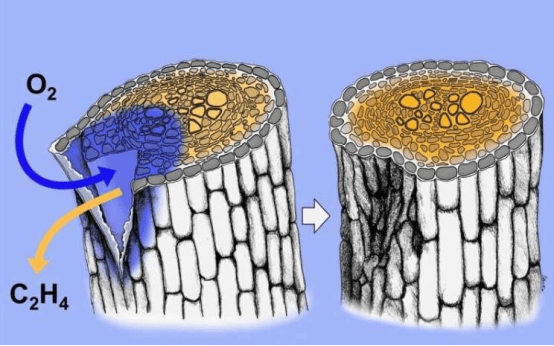
All living organisms possess protective barrier tissues to defend against environmental threats. In plants, the periderm forms a tough cork layer that prevents water loss and blocks harmful microorganisms—examples include potato skins and tree bark. The research group led by Professor Ari Pekka Mähönen from the Faculty of Biological and Environmental Sciences at the University of Helsinki used the model plant Arabidopsis thaliana for their study. They found that an intact periderm is almost impermeable to gases: the plant hormone ethylene accumulates within the plant tissue, while oxygen is depleted during normal growth. However, when the periderm is wounded, the situation changes: ethylene escapes, and oxygen enters through the wound. These changes serve as warning signals that initiate periderm regeneration. Once a new barrier forms, gas diffusion is restricted again, ethylene accumulates, oxygen is depleted, and the signal to stop regeneration and resume normal growth is sent.
Dr. Hiroyuki Iida, the lead scientist on this project in Mähönen's team, explained that the team first identified the role of ethylene in regeneration, and later collaborated with Professor Francesco Licausi, a leading expert in plant oxygen sensing at the University of Oxford, to discover the role of oxygen. This finding reveals a simple yet effective strategy plants use to monitor damage. Dr. Iida emphasized that gas diffusion through wounds is not merely a consequence of injury—it is the signal that initiates healing.
The discovery has far-reaching implications. Understanding the trigger mechanism for periderm regeneration could help improve stress resistance in crops such as potatoes, carrots, and fruits. A damaged periderm barrier causes vegetables or fruits to lose moisture, become susceptible to pathogens, and ultimately rot. Enhancing plants' natural repair system can increase crop survival rates, reduce post-harvest food waste, and help plants better withstand environmental stresses such as drought.
Against the backdrop of a global food system under pressure from climate change and population growth, this research offers a new pathway to promote agricultural sustainability. Professor Mähönen summarized: “Improving the healing capacity of barrier tissues could fundamentally transform food storage and plant resilience.”