
A research team from Queensland University of Technology in Australia published results in Nature Communications, significantly enhancing the thermoelectric performance of germanium telluride materials through copper doping technology. This technique increases the material's efficiency in converting waste heat to electricity by more than 50%.
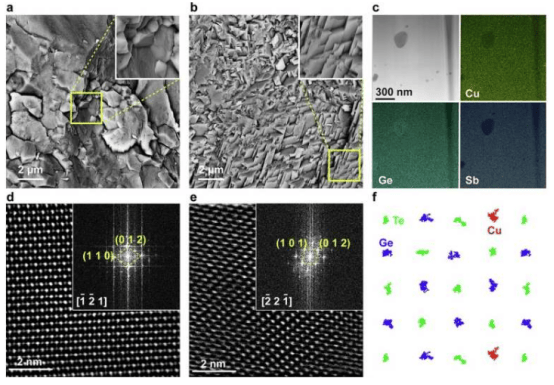
The research was led by Professor Zhi-Gang Chen's team, who employed an innovative solid solution strategy to precisely dope copper ions into the germanium telluride crystal structure. Professor Chen stated: "We substantially improved material performance by targeted doping to replace specific atoms, rather than traditional interstitial doping." Experiments showed that the figure of merit of the new material improved from 1.5 to 2.3.
First author Yongqi Chen noted: "This study provides a new approach to identifying and repairing atomic defects in materials." Germanium telluride, as an important thermoelectric material, has broad application prospects in electronic devices and energy recovery. The researchers indicated that this technology can also be extended to optimize the performance of other thermoelectric materials.
The team is currently further exploring the application of copper doping technology in different material systems to drive the development of more efficient thermoelectric converter devices.