
A joint research team from Pusan National University in Korea and Hokkaido University in Japan has successfully developed a new crystal material with oxygen "breathing" functionality. This breakthrough discovery was published in Nature Communications on August 15, 2025, and may bring new possibilities to clean energy technologies and smart materials development.
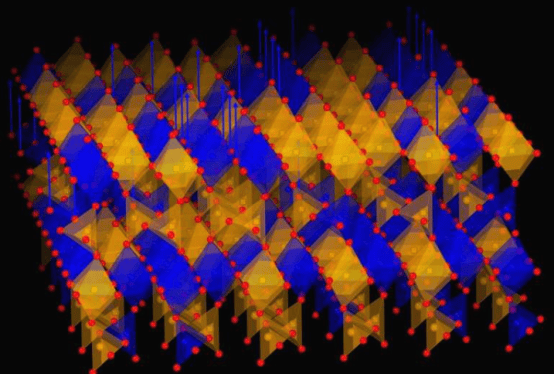
This metal oxide crystal, composed of strontium, iron, and cobalt, can reversibly release and absorb oxygen under mild conditions. The lead researcher, Professor Hyoungjeen Jeen from Pusan National University, stated: "The material functions like it has lungs, inhaling and exhaling oxygen on demand." Experiments showed that the crystal maintains structural stability after multiple cycles, overcoming the limitations of traditional materials that easily decompose or require extreme conditions.
The characteristics of this new crystal material give it potential applications in various fields. Professor Hiromichi Ohta from Hokkaido University noted: "This material can be applied to solid oxide fuel cells, smart temperature-regulating windows, and thermal management devices." Particularly noteworthy is that the material forms a new but stable crystal structure after oxygen release, and can fully revert to its original state when oxygen is restored, demonstrating excellent reversibility.
Through comparative experiments, the researchers confirmed that the crystal's transparency significantly increases after oxygen release, a property of special value for developing energy-saving architectural glass. The team is currently further optimizing the material's performance and exploring practical application pathways in large-scale clean energy systems. The research was jointly funded by scientific institutions in both countries, marking an important progress in Korea-Japan scientific and technological cooperation.