
NIBIO is committed to developing methods to convert greenhouse gases such as carbon dioxide into biomethane (a renewable energy source). Researchers including Dr. Lu Feng are utilizing microbial thin layers—known as biofilms—to transform greenhouse gases into clean fuel.
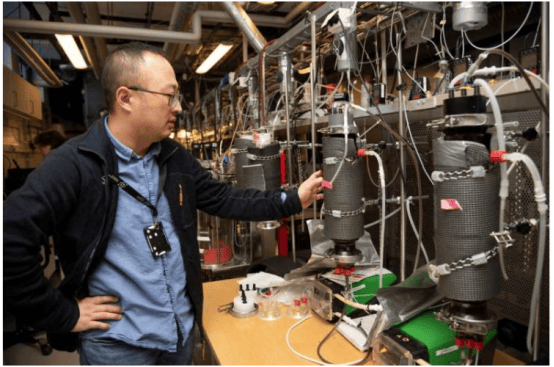
Carbon-based gases such as carbon dioxide (CO₂) and carbon monoxide (CO) are commonly associated with pollution and climate change. Converting them into useful substances like clean fuel would be of great significance. This collaboration aims to develop new methods for producing green biomethane, making it a sustainable alternative to natural gas.
The researchers documented methods for producing biomethane with purity exceeding 96% using biofilm-based processes, as recorded in five scientific papers published in Biomass and Bioenergy, Journal of Environmental Chemical Engineering, Bioresource Technology Reports, Bioresource Technology, and Biotechnology for Biofuels and Bioproducts.
Biofilms are layers of microorganisms that grow on surfaces, forming collaborative communities capable of processing gases and converting them into methane. Dr. Feng explains that the biofilm method differs from traditional biogas production: it operates under anaerobic conditions, using self-selected microorganisms within thin biofilms to capture and process gas streams. Biofilms are widespread in nature, and the researchers aim to engineer them in fixed-bed or moving-bed reactors for targeted conversion, opening new opportunities to turn climate-impacting gases into valuable energy.
In addition, the researchers attempted to enhance methane yield by adding selected microorganisms (bioaugmentation). Dr. Feng noted that introducing specific methanogenic microorganisms into the reactor can guide the process to more effectively convert carbon dioxide.
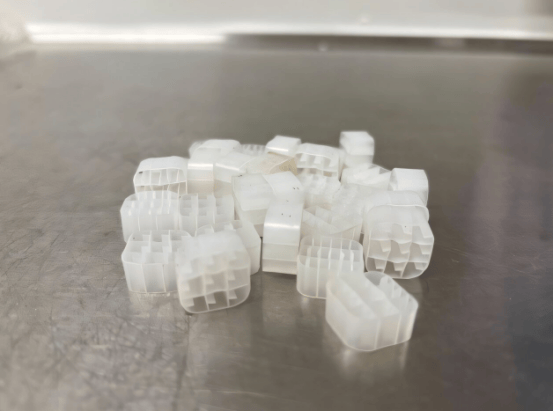
Biofilm carriers produced by BioWater Technology—small plastic pieces— are widely used in water and wastewater treatment systems to provide surfaces for beneficial bacteria to grow and function. The biofilms developed by the researchers offer a stable and efficient process, helping to retain microorganisms, improve gas-liquid contact, significantly increase the reaction surface area, and tolerate harmful substances that may interfere with gas production.
Biofilms are particularly helpful in addressing challenges such as high concentrations of ammonia and hydrogen sulfide (H₂S), which are commonly present in industrial gas streams and can cause problems in conventional bioreactors. In one study, biofilm reactors were tested for H₂S treatment, showing that systems without biofilms lost up to 30% of methane, while biofilm reactors maintained high methane quality even under extremely high H₂S levels.
The researchers also studied the impact of ammonia on methane production. Using AnMBBR (Anaerobic Moving Bed Biofilm Reactor), they found that biofilms could still produce methane even at high ammonia concentrations. Dr. Feng stated that high ammonia is generated when producing biogas from fish sludge, animal manure, or food waste, and analysis showed that biofilms contain ammonia-tolerant microorganisms, including Methanobacterium thermoautotrophicum, which can utilize H₂ and CO₂ to produce methane.
In another study, the researchers tested the biofilm method on syngas (a mixture of hydrogen and carbon monoxide). Dr. Feng noted that this has the potential to unlock biomethane production from wastes (such as plastic waste and lignocellulosic biomass) that normally do not degrade in biological processes. The study found that adding extra hydrogen can increase methane yield, but excessive hydrogen can lead to process imbalance.
Dr. Feng emphasized that biofilm reactors hold great potential, but require careful control to perform optimally at industrial scale. Biofilm-based processes provide a powerful and flexible platform for future biogas production, with the potential to make significant contributions to reducing harmful gas emissions and producing renewable energy.