
Although recent studies have revealed the potential threat of climate change to crop yield reductions, its impact on livestock farming has rarely been deeply explored. A study published in the journal Science Advances conducted a comprehensive assessment of the effects of high temperatures on milk production in dairy cows, revealing severe challenges posed by climate change to the dairy industry.
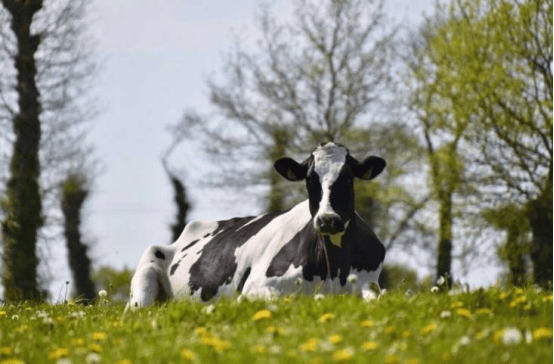
The study points out that extreme hot weather can cause a single-day milk yield reduction of up to 10% in dairy cows, and this impact may persist for more than 10 days. The research team used Israel's dairy industry as a sample, where the dairy system is advanced, farms are distributed nationwide, and temperature and humidity vary significantly, representing conditions in major milk-producing countries worldwide. By analyzing 12 years of meteorological data and surveying more than 300 dairy farmers, the researchers found that when the wet-bulb temperature (combining dry-bulb temperature and humidity) exceeds 26°C, milk production can drop by up to 10%.
Although nearly all surveyed farms employed cooling technologies such as ventilation and misting systems, these measures could only offset about half of the yield losses in 20°C weather, and their effectiveness decreased as temperatures rose. At 24°C, these measures offset only 40% of the losses. However, the researchers also noted that installing cooling equipment remains a worthwhile investment, with farmers typically recovering costs within about one and a half years.
The study further used Israeli data to predict the impact of climate change on global milk production by mid-century. Results show that without cooling measures, average daily milk yield in the world's top 10 milk-producing countries could decline by 4%, with higher losses per cow in countries such as India, Pakistan, and Brazil—ranging from 3.5% to 4% per cow per day. Even with cooling measures, daily losses per cow in the five major dairy-producing countries (including the United States and China) would still reach 1.5% to 2.7%.
The research team emphasized that while cooling technologies offer some value, their limitations cannot be ignored. Policymakers should explore additional strategies, such as reducing confinement and calf separation to lower stress factors, thereby reducing cows' sensitivity to heat and enhancing their resilience. This study not only sounds an alarm for the dairy industry but also provides new perspectives and ideas for global responses to climate change.