
On August 6, the Korea Institute of Ocean Science and Technology (KIOST) announced that a research team led by Dr. Yoon Gil-rim from the Department of Ocean Space Development and Energy has successfully developed a new ultrasonic cleaning device capable of efficiently removing salt (NaCl) from sea sand. The research team has published the results demonstrating the device's performance in Scientific Reports, a sister journal of Nature.
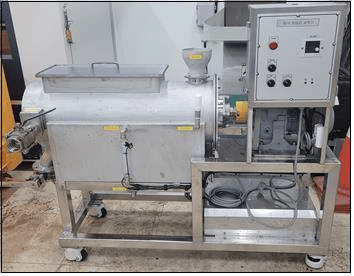
This device leverages the cavitation mechanism of ultrasound to enhance particle removal force and penetration capability, enabling non-contact cleaning. Even in narrow spaces, it can precisely and quickly remove salt, significantly reducing water consumption and cleaning processing time.
Conventional sea sand cleaning methods use water spraying, requiring large amounts of water sprayed from above to remove salt—approximately 4 tons of water are needed to clean 1 ton of sea sand. In contrast, the ultrasonic method developed by the research team mixes sea sand and freshwater at a 1:2 ratio and applies ultrasonic waves at 300W or higher power for 3 minutes, reducing the salinity concentration to below the 0.04% standard recommended by the Ministry of Land, Infrastructure and Transport.
KIOST President Lee Hee-seung stated that this research is highly significant, providing an alternative solution to the shortage of sea sand while ensuring structural safety and economic feasibility. He added that the institute plans to further develop related technologies to enable faster and more precise processing of large volumes of sea sand in the future.