
Researchers at the U.S. National Institute of Standards and Technology (NIST) have demonstrated a new method for detecting and measuring trace amounts of radioactivity in radioactive materials—Low-Temperature Decay Energy Spectroscopy (DES). The research results have been published in Metrologia. This innovative technology has far-reaching implications and could improve cancer treatment and ensure safe nuclear waste cleanup.
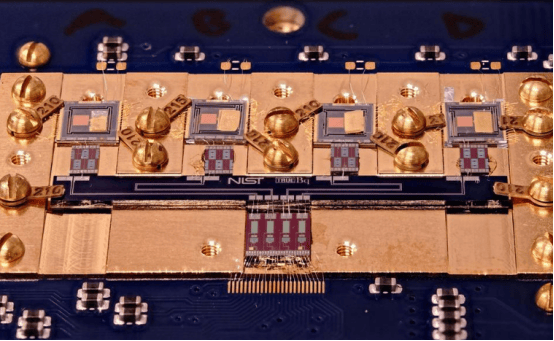
The key to this new technology lies in Transition Edge Sensors (TES), a high-tech device widely used to measure radiation signatures. TES can record individual radioactive decay events, and after accumulating large amounts of data, can identify the radionuclides responsible for the decays. NIST physicist Ryan Fitzgerald stated that TES is far more advanced than detectors like Geiger counters, allowing us to obtain a detailed “fingerprint” of the material.
TES devices operate at extremely low temperatures close to absolute zero. Energy released from radioactive decay in the sample is absorbed by the TES, causing a tiny change in its resistance. Researchers precisely measure this resistance change to provide a high-resolution “energy signature” of the decay event, enabling identification of specific radioactive atoms. Traditional methods struggle to simultaneously measure the amount of radioactive elements and identify the radioactive atoms within them, often requiring multiple techniques for full sample characterization. DES, however, can both identify radioactive elements and quantify their activity levels.
When dealing with a barrel of radioactive liquid, traditional methods may take months to complete identification and measurement for safe handling, whereas TES can provide a complete radioactivity profile in just days. Traditional radioactivity measurements require multiple methods and complex procedures, plus additional materials. The new method eliminates these needs and can precisely measure tiny samples, enabling scientists to better monitor, use, and protect radioactive materials.
The researchers used a specialized inkjet device to spray trace radioactive solutions onto a thin gold foil covered with nanopores. By precisely measuring the mass of the sprayed solution and the radioactivity of the dried sample, they can calculate the specific activity (radioactivity per unit mass) of the sample.
This technology has broad potential applications. In medicine, it can ensure the purity and potency of radiopharmaceuticals used in cancer treatment. In nuclear energy, it can quickly identify radioactive components in reprocessed fuel, accelerating the development of new advanced reactors.
This research represents the first step in the “TrueBq” project, aimed at transforming the way radioactivity is monitored and characterized. The name derives from the unit of radioactive decay measurement, honoring French physicist Henri Becquerel. The TrueBq project seeks to develop more comprehensive measurement systems by integrating precision mass balance systems with TES devices to measure the massic activity of radioactive materials with unprecedented accuracy.
Compared to traditional workflows, the new method offers significant improvements, promising shorter analysis times and higher accuracy. Innovations developed under the TrueBq project will enhance NIST’s ability to serve customers, benefiting services such as calibrations and standard reference materials.
While TrueBq currently focuses on improving NIST’s own measurement techniques, the researchers hope to develop more portable and user-friendly versions in the future for deployment in medicine, environmental remediation, and nuclear waste management.