
In a pioneering experiment, engineers at the University of Pennsylvania successfully transitioned quantum networks from the laboratory to commercial fiber optic cables, using the same Internet Protocol (IP) as current networks. According to Science magazine, the study confirms that fragile quantum signals can stably operate on the same infrastructure that carries everyday online traffic. The research team conducted field tests on Verizon's campus fiber network, demonstrating the real-world feasibility of quantum networking technology.
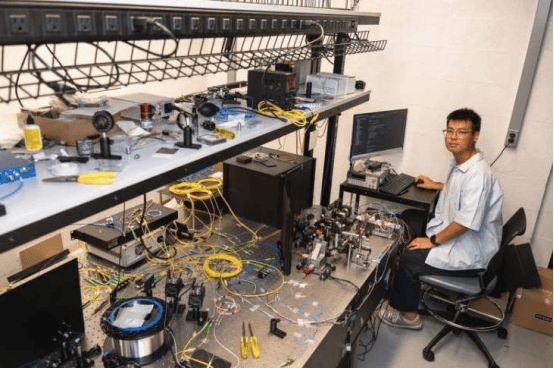
The team developed a miniature “Q-chip” capable of coordinating quantum and classical data while remaining compatible with modern network protocols. This innovation lays the foundation for building a future “quantum internet,” with transformative potential similar to the early days of the classical internet. Quantum signals rely on the properties of “entangled” particles to enable shared processing capabilities between quantum computers, opening new pathways for accelerated artificial intelligence, new drug development, and novel materials design. The study marks the first time quantum signals were transmitted over commercial fiber, with automatic noise correction and standardized packet processing, using the same addressing system and management tools as traditional internet.
Professor Feng Liang from the Department of Materials Science and Engineering stated: “By validating the quantum signal management capabilities of integrated chips on a live commercial network, we have taken a critical step toward scalable experiments and a practical quantum internet.” The “Q-Chip” developed by the research team enables routing by sending classical signals ahead while preserving quantum signal integrity. The system embeds quantum information within the IP framework, proving that a quantum internet can adopt the language of conventional networks—a key enabler for leveraging existing infrastructure. During testing, the system maintained over 97% transmission fidelity. The silicon-based chip design supports mass production, facilitating widespread adoption.
Scaling a quantum internet still faces challenges, primarily the inability to amplify quantum signals without destroying entanglement. Current “quantum key” transmission technologies enable long-distance secure communication but fall short of connecting practical quantum processors. The University of Pennsylvania's research provides an important early solution by demonstrating chip-based quantum signal operation over commercial fiber. Team member Robert Broberg likened the achievement: “This is akin to the early 1990s for the traditional internet—the quantum internet is now opening the door to unknown transformations.”