
Astronomers using NASA's James Webb Space Telescope have found new evidence of a possible planet in the Alpha Centauri system, just 4 light-years from Earth. The system consists of the Sun-like stars Alpha Centauri A and Alpha Centauri B, which orbit each other closely, along with the faint red dwarf Proxima Centauri. Scientists have long sought exoplanets in this system. While three planets have been confirmed around Proxima Centauri, detecting planets around the Sun-like binary pair Alpha Centauri A and B has proven extremely difficult.
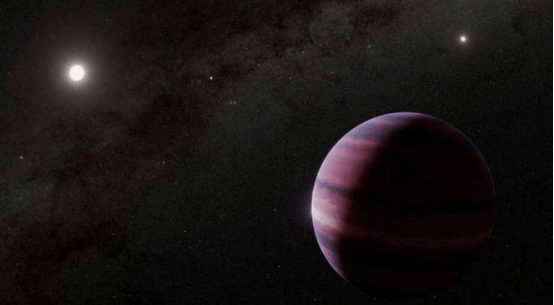
In this case, Webb's Mid-Infrared Instrument (MIRI) provided strong evidence for a gas giant planet in the habitable zone of Alpha Centauri A. The habitable zone is the region around a star where liquid water could exist on a planet's surface. The research team used MIRI's coronagraph to block the overwhelming light from the star, capturing a candidate planet more than 10,000 times fainter than Alpha Centauri A. If confirmed, this would be the closest known planet to Earth in the habitable zone of a Sun-like star—although as a gas giant, it is unlikely to support life as we know it.
Lead researcher Behman noted that, despite the extreme observational challenges, the proximity of the Alpha Centauri system offers an excellent opportunity to gather data on other planetary systems. This candidate would be the closest imaged planet to its host star and the first discovered orbiting a star with the same age and temperature as the Sun. The team believes it may be a Saturn-mass gas giant on an elliptical orbit around Alpha Centauri A. Follow-up observations with Webb have not yet detected the planet again, but computer simulations suggest it may be too close to the star to be easily captured. Future observations with Webb, as well as NASA's Nancy Grace Roman Space Telescope—scheduled for launch in May 2027—could provide more information about this candidate. Sanghi emphasized that, if confirmed, this would mark a new milestone in exoplanet imaging.