
Scientists at King Abdullah University of Science and Technology (KAUST) have achieved a major breakthrough in aqueous rechargeable battery research by identifying the key molecular culprit that has hindered their emergence as a safer and more economically sustainable energy storage option. The findings, published in Science Advances, are expected to accelerate the large-scale adoption of aqueous batteries for energy storage and offer new promise for renewable energy integration.
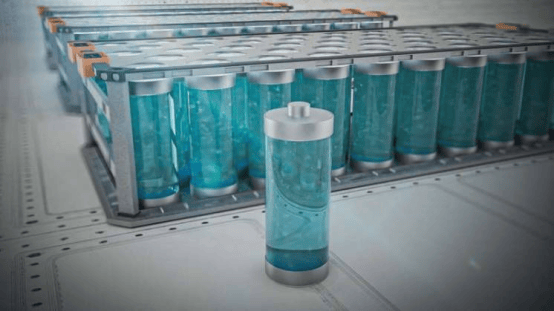
Aqueous batteries are gaining global attention as a sustainable solution for large-scale energy storage, with the market projected to exceed $10 billion by 2030. Compared to lithium-ion batteries commonly used in electric vehicles, aqueous batteries offer greater safety and sustainability advantages when integrating renewable sources like solar power into the grid. However, their development has long been limited by issues related to battery lifespan and performance.
One of the critical factors determining battery lifespan is the anode, where chemical reactions generate and store energy. Parasitic side reactions degrade anode performance and shorten battery life. The new KAUST study reveals the mechanism by which water affects battery lifespan and performance: free water (water molecules not tightly bound to each other) promotes parasitic reactions that consume energy and damage the anode.
The researchers discovered that adding inexpensive salts, such as zinc sulfate, can mitigate this issue and even extend battery lifespan by more than tenfold. Sulfate ions stabilize free water bonds, acting as a “water glue” that alters water molecule dynamics and significantly reduces the occurrence of parasitic reactions. While most experiments were conducted on zinc-sulfate-based batteries, preliminary investigations suggest that sulfates produce similar effects on other metal anodes, indicating that incorporating sulfates could serve as a universal strategy to prolong the life of all aqueous batteries.
KAUST research scientist Yunpei Zhu, who led most of the experiments, stated: “Sulfates are inexpensive, widely available, and chemically stable, making our solution both scientifically and economically viable.”
Husam Alshareef, KAUST professor and chair of the KAUST Center of Excellence for Renewable Energy and Storage Technologies (CREST), who led the study, emphasized: “Our findings highlight the critical role of water structure in battery chemistry — a previously overlooked key parameter.”
The research also involved KAUST professors Omar Mohammed, Omar Bakr, Xixiang Zhang, and Mani Sarathy. These results provide a theoretical foundation for optimizing the design of aqueous rechargeable batteries and are poised to drive their widespread application in renewable energy storage, supporting the global transition to green energy.