
A research team has developed a novel and more cost-effective method for synthesizing ammonia decomposition catalysts, enabling more efficient hydrogen production from ammonia. This is expected to make a significant contribution to realizing a hydrogen economy. The research results were published in the journal Small. The team was led by Dr. Kee Young Koo from the Hydrogen Energy Research Department at the Korea Institute of Energy Research (KIER).
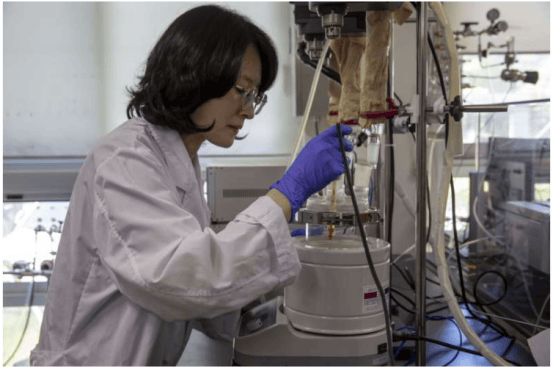
Ammonia, composed of three hydrogen atoms and one nitrogen atom, has a high hydrogen content and is a highly promising hydrogen carrier suitable for long-distance transportation and large-scale storage. With existing global infrastructure for ammonia transportation and storage already in place, ammonia represents a more economical means of hydrogen delivery. However, technologies for decomposing ammonia to produce hydrogen at the point of demand remain in the early stages of development.
The core of this technology lies in the use of ruthenium (Ru) catalysts, which can achieve rapid ammonia decomposition at relatively low temperatures (between 500°C and 600°C)—more than 100°C lower than required by other catalysts. Ruthenium is a rare metal found in only a few countries, making procurement difficult. Previously, ruthenium was used in nanoscale form to maximize performance, but large-scale production of nanocatalysts is complex and costly, hindering the commercialization of ammonia decomposition technology.
To address this, the research team developed a new ruthenium catalyst synthesis method based on a polyol process to improve economic feasibility. Catalysts produced via this method exhibit ammonia decomposition performance more than three times higher than traditional catalysts.
The polyol process is commonly used to synthesize metal nanoparticles. Traditional methods require capping agents to prevent particle aggregation, which complicates the process and increases costs. The research team designed a method to control nanoparticle aggregation without capping agents, focusing on the influence of organic molecule (carbon chain) length on the degree of aggregation. They hypothesized that controlling the structure and length of carbon chains could effectively suppress aggregation.
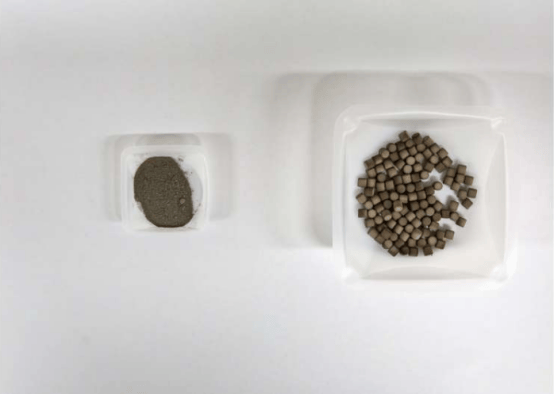
Experiments confirmed that using longer-chain butanediol enabled uniform dispersion of 2.5nm ruthenium particles without capping agents, and the formation of “B5 sites” (active sites for hydrogen production) was verified. The resulting catalyst significantly outperformed existing catalysts: activation energy was reduced by approximately 20%, hydrogen formation rate increased by 1.7 times compared to traditional ruthenium catalysts without butanediol, and per-unit-volume ammonia decomposition efficiency was more than three times higher than that of catalysts produced by conventional synthesis methods, highlighting excellent economic potential.
Lead researcher Dr. Kee Young Koo stated that the ammonia decomposition catalyst synthesis technology developed in this study provides a practical solution to overcome the limitations of mass production and high costs associated with traditional nanocatalysts, supporting the localization and commercialization of ammonia decomposition catalyst technology in Korea. The team plans to advance performance validation by producing granular catalysts in bulk and applying them to various ammonia cracking systems.