
With increasing demand for healthier alternatives to traditional wheat-based products, exploration of novel functional ingredients has gained momentum. Recently, a research team led by biologist Leonardo Mendes de Sousa Mesquita from the Institute of Biosciences at the University of São Paulo in Brazil discovered that partially defatted sunflower seed flour (SF)—a by-product of industrial sunflower oil extraction—shows promise as a bread ingredient rich in protein, fiber, and antioxidant compounds.
Mesquita, first author of the related article published in ACS Food Science & Technology, stated: "Considering the high protein and chlorogenic acid content of sunflower seed flour, our goal was to optimize its reuse."
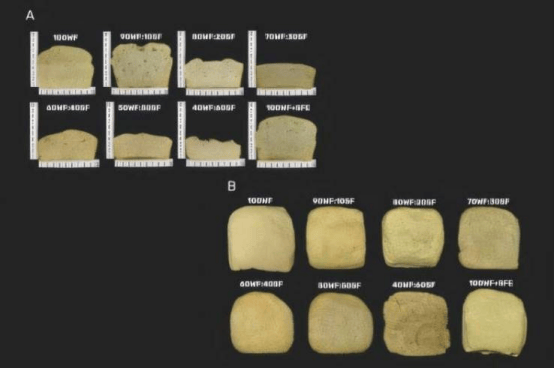
To evaluate the potential of SF as a partial replacement for wheat flour, the researchers prepared breads by substituting wheat flour with varying proportions of SF (from 10% to 60%) and characterized all formulations based on dough chemical composition, rheological parameters, and final product physical properties.
The study found that sunflower seed flour contains a high proportion of protein (40% to 66%), dietary fiber, iron, calcium, and chlorogenic acid—which has antioxidant, anti-inflammatory, and hypoglycemic effects. Adding SF significantly increased the protein and fiber content of the bread. For example, the formulation with 60% SF had more than three times the protein content of traditional bread, along with a substantial increase in antioxidant levels.
Mesquita explained: "Reusing this by-product can enhance the nutritional value of bread, reduce the environmental impact of the sunflower oil industry, and sunflower seed flour is low-cost." Additionally, industrial sunflower oil extraction is performed by pressing without adding chemicals, ensuring the sunflower seed flour is free of additional contaminants.
However, high levels of SF substitution for wheat flour also compromised some sensory properties of the bread, such as reduced specific volume and increased hardness. The researchers found that adding a water extract of SF (SFE) successfully preserved the bread’s structure and texture, bringing it closer to the mouthfeel of traditional wheat bread. Mesquita believes that incorporating SFE is an effective strategy to enhance the nutritional value of sunflower seed flour while mitigating adverse sensory effects.
He further explained that this water extract is obtained by dissolving SF in water and filtering it, without requiring other physical or chemical processes. Currently, he is investigating whether SFE can fully replace SF or be mixed in different proportions to help the baking industry determine ideal formulations.
This research is part of a broader initiative aimed at reusing industrial by-products. Mesquita noted: "Transforming waste into products is a fundamental strategy for promoting the circular economy and reducing resource waste. Partially defatted sunflower seed flour is not only an inexpensive raw material but also contributes to human health and environmental sustainability."
The study involved researchers from the Multidisciplinary Laboratory of Food and Health at the Faculty of Applied Sciences of the State University of Campinas and the Laboratory of Food Technology and Nutrition at the Federal University of São Paulo, jointly advancing this sustainable innovation.