
A research team from Columbia Engineering has developed a novel optogenetic technology that enables precise control of tissue folding processes in living embryos by regulating protein activity. This breakthrough brings new possibilities to the fields of biorobotics and medical research.
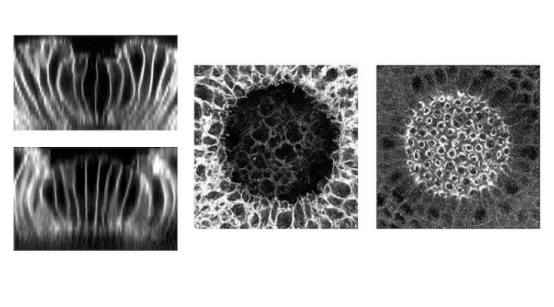
The researchers used the CRISPR-Cas9 gene editing system to introduce a photosensitive module into the native genes of fruit flies, creating a new tool named "endogenous OptoRhoGEF." This technology allows regulation of protein activity associated with cell contraction through specific wavelengths of light, thereby influencing mechanical force patterns during embryonic development. Tissue folding research is a key approach to understanding the mechanisms of embryonic development.
The research team leader, Associate Professor of Mechanical Engineering Karen Kasza, stated: "Being able to precisely control the shape of tissue sheet folding is a foundational step toward 'tissue origami.' It can be used to study 3D tissue biology outside of developing embryos or to construct and control the movement of miniature machines or robots made from living biological cells."
This study is the first to achieve tunable optogenetic control of cell contraction forces, rather than simple on/off switching. Experiments revealed that groove depth is directly correlated with the number of contraction-related proteins on the cell membrane, while the rigid protein layer inside the embryo also significantly influences the way tissue grooves form. This tissue folding research provides a new perspective for understanding embryonic development processes.
Biomedical Engineering PhD student Andrew Countryman noted: "Similar to Drosophila embryos, human embryos also extensively employ groove formation during development. Failure of tissues to form grooves properly is associated with common and severe congenital disorders (such as spina bifida)." In the future, this technology may help scientists better analyze tissue and organ development and disease.
The novel optogenetic technology provides an innovative tool for tissue engineering and regenerative medicine. The researchers plan to further investigate other mechanisms of tissue groove formation, as well as tissue behaviors such as bending, stretching, and flowing. The combination of these fundamental deformation modes constitutes the diverse shapes of organs and bodies. Tissue folding research will continue to advance progress in developmental biology.