
In the race to develop cleaner and more affordable batteries, reliance on expensive and difficult-to-source metals such as cobalt and nickel remains a major obstacle. These elements power the cathodes of most lithium-ion batteries but come with environmental, ethical, and financial costs.
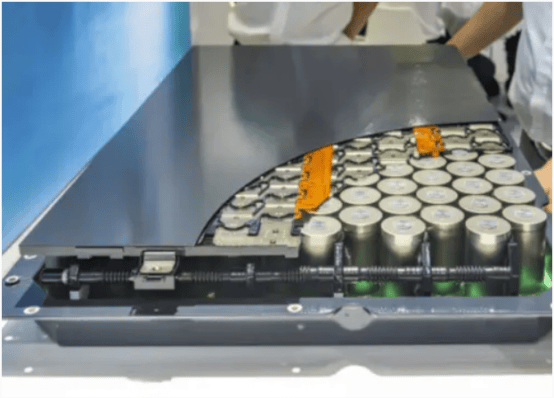
Now, researchers at McGill University, in collaboration with scientists from the United States and Korea, have developed a new method for manufacturing high-performance cathode materials that completely eliminates the need for cobalt and nickel. Their scalable, energy-efficient approach produces "disordered rock salt" (DRX) cathodes—a promising alternative that has previously been difficult to industrialize.
The key to the team's success is a two-step molten salt method. By controlling the environment in which DRX particles form, the researchers achieved finely tuned nucleation followed by constrained growth, yielding uniform, highly crystalline particles smaller than 200 nanometers.
"Our method enables large-scale production of high-quality DRX cathodes with consistent performance, which is critical for their application in electric vehicles and renewable energy storage," said Jinhyuk Lee, Assistant Professor in McGill University's Department of Mining and Materials Engineering and corresponding author of the study. The approach eliminates the need for grinding or post-processing steps that previously made DRX manufacturing inefficient and inconsistent.
Lee added: "We have developed the first direct synthesis method for highly crystalline, uniformly dispersed DRX single particles without post-synthesis grinding. This morphology control both improves battery performance and enhances consistency in large-scale DRX cathode production."
Testing showed that batteries made with the new DRX material retained 85% of their capacity after 100 charge-discharge cycles—more than twice the durability of DRX particles produced using conventional methods. Particle uniformity and crystal structure appear to be key factors in the performance enhancement.
Crucially, DRX cathodes require neither nickel nor cobalt, making them more environmentally friendly and ethically sound. Mining of these metals is highly controversial and subject to global supply chain volatility. The innovation led by McGill University could play a central role in reducing the industry's dependence on them.