
On September 1, the Superconductivity Application Research Center at Seoul National University announced the launch of the second phase of joint research with the UK Atomic Energy Authority (UKAEA), focusing on the development of high-temperature superconducting cables — a core component for the UK's next-generation nuclear fusion power plant, STEP.
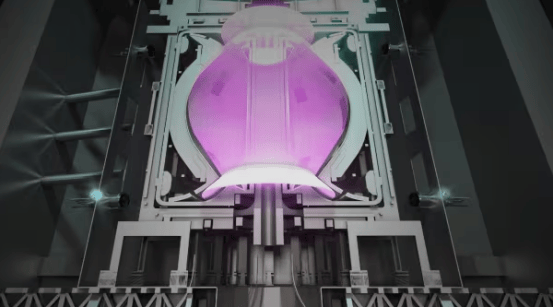
The UK's STEP project, short for Spherical Tokamak for Energy Production, was launched in 2019 as a national-level fusion energy development project. Its goal is to build a prototype fusion power plant around 2040 to demonstrate the commercial viability of fusion technology and verify the self-sufficiency of fusion fuel (tritium). Specific objectives include achieving a stable net power output exceeding 100MW, expanding the application of fusion energy, ensuring tritium fuel self-sufficiency, verifying material and component performance, and developing full life-cycle cost-effective solutions. In November 2024, the UK Atomic Energy Authority officially announced the transfer of the STEP project to its subsidiary UKIFS, which will take full responsibility for the project’s design, construction, and operation.
The UK selected Seoul National University to participate in the development of high-temperature superconducting cables primarily due to the "no-insulation high-temperature superconducting" technology proposed by Professor Seungyong Hahn from the Department of Electrical and Information Engineering. This technology can reduce the volume of existing superconducting magnets to less than one-fifth, significantly lowering construction and operating costs. To this end, Seoul National University signed a joint research agreement with the UK Atomic Energy Authority valued at approximately 1.8 billion KRW, spanning from June 2024 to March 2025, to advance the first phase of development. In the first phase, Korean companies PowerNix and Standard Magnet participated in producing a 3.6-meter prototype cable. In July, the cable was evaluated at the SULTAN facility in Switzerland, a world-class superconducting conductor testing facility. The test results showed that the cable could withstand an external magnetic field of 10.9T, a current of 91kA, and electromagnetic forces of up to 100 tons. After more than 1,400 repeated tests, its performance did not degrade, setting a record in the high-temperature superconducting cable field since the facility began operations in 1992.
In the upcoming second phase of joint research, Seoul National University and the UK Atomic Energy Authority will focus on improving the performance of the prototype cable and extending its length to tens of meters through "long-length" technology. In addition, the scope of cooperation will be expanded to the design, production, and evaluation of high-temperature superconducting magnets suitable for the "STEP" nuclear fusion system, to enhance reliability and technical maturity required for practical commercialization. Seoul National University stated that both parties are expanding the scope of cooperation to cover the design, production, and evaluation of prototypes for the "toroidal field (TF) high-temperature superconducting magnets," a core component of the "STEP" nuclear fusion system, in the hope that this research will contribute to strengthening cooperation in small-scale nuclear fusion technology and enhancing technological integrity.