
A research team from ETH Zurich has successfully completed 3D printing of complex muscle tissue under microgravity conditions. This technological breakthrough provides a new platform for drug testing and disease research during space missions. The related results have been published in the journal Advanced Science.
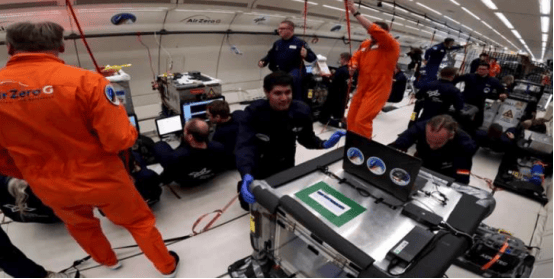
Long-term exposure of astronauts to the microgravity environment in space leads to muscle tissue degradation. To create a more realistic research model, the research team led by Dr. Parth Chansoria created instantaneous microgravity conditions through parabolic flights and used the self-developed G-Flight biomanufacturing system for tissue printing. The system's bioresin formulation can generate viable muscle tissue within 30 seconds under weightless conditions.
The study shows that the microgravity environment can effectively avoid the deformation of biological structures caused by Earth's gravity. Dr. Chansoria pointed out: "Under normal gravity, the weight of cells in the bioink causes the structure to collapse before solidification. Microgravity conditions eliminate these interferences, allowing us to accurately replicate the arrangement of muscle fibers in the body." Experiments confirmed that the tissue printed in space has comparable cell viability and fiber quantity to ground-based samples.
This in-orbit manufacturing technology opens a new path for space biomedical research. The precisely constructed muscle tissue can be used to simulate disease processes such as microgravity-induced muscle atrophy and muscular dystrophy, and provides a more reliable testing platform for evaluating drug efficacy. The G-Flight system's long-term bioresin storage capability also makes it suitable for future applications on space stations and orbital platforms.
The research results mark an important advancement in space tissue engineering. By directly manufacturing human-like organoids in a space environment, it will deepen the understanding of disease mechanisms and promote the development of new therapies.