
Scientists at Cornell University are exploring a new path for developing biodegradable materials using biological growth techniques by studying the mechanical mechanisms of plant cell walls. The research focuses on the model plant Arabidopsis thaliana, aiming to analyze the mechanical properties of cell walls during growth, laying the foundation for the future development of environmentally friendly materials directly formed by plants.
Si Chen, a postdoctoral researcher at the Engineering Biology for Materials Innovation (ELMI) and first author of the paper, stated: "By understanding the cell wall mechanics associated with plant development, we may in the future be able to design plant materials that grow into specific shapes and sizes, such as biodegradable packaging formed directly by the plant itself." Established three years ago, this interdisciplinary institute brings together biologists, engineers, and architects to jointly develop new functional and sustainable materials derived from plants, fungi, and bacteria.
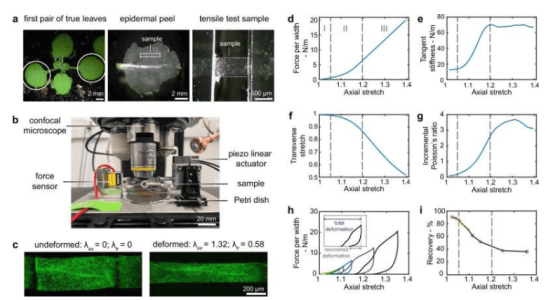
The research focuses on the mechanical behavior of primary plant cell walls during the growth phase, including their stretch-recoil properties, plastic deformation mechanisms, and tensile thinning phenomena. Through innovative experimental design, the team quantified the relationship between the force required to stretch the cell wall and its thickness changes. Senior author Professor Adrienne Roeder noted: "If we can regulate the morphogenesis process during plant growth, or shape robust materials based on outer structures before the secondary cell wall hardens."
The study also analyzed the effect of cell wall material deposition on growth morphology through the "spiral2" Arabidopsis mutant and constructed mechanical models to simulate the network behavior of cellulose fibers. Roeder further emphasized: "The beam-like connection mechanism in the model is crucial, which suggests that future material design should focus on regulating the properties of microscopic connection points."
This research, published in Nature Communications, not only advances the interdisciplinary integration of plant biology and mechanical engineering but also provides theoretical support for developing biomaterials with environmental responsiveness.