
A new study presented at the Goldschmidt Conference in Prague brings a new perspective to agricultural carbon reduction. Based on more than 100 years of data from the Mississippi River Basin and detailed computer models, the study points out that adding lime to agricultural soil helps remove carbon dioxide from the atmosphere, rather than causing carbon dioxide emissions as believed by international guidelines. This conclusion contradicts international guidelines for reducing agricultural emissions.
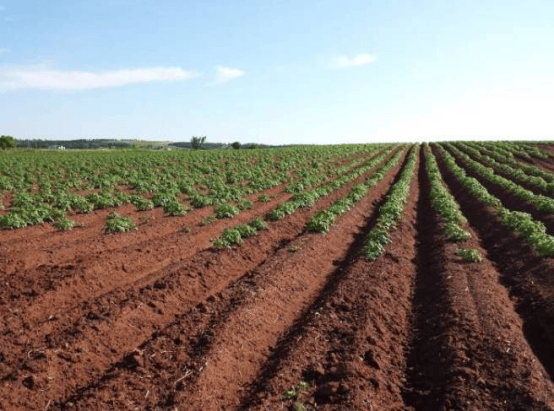
Agriculture is a major source of greenhouse gas emissions, a large part of which is related to soil. For a long time, the Intergovernmental Panel on Climate Change (IPCC) and others have believed that when lime is added to agricultural soil to reduce acidity, the carbon in it is emitted in the form of carbon dioxide. However, the research team from the Yale Center for Natural Carbon Capture found that the acidity increased in the form of atmospheric pollution and fertilizers is the main driver of soil carbon dioxide emissions.
By calculating emissions based on acid inputs, the research team found that emissions may have been underestimated in some cases previously, and the carbon reduction potential of lime has also been overlooked. When lime is added to the soil, it reacts with carbonic acid to form bicarbonate, calcium and magnesium. If strong acids such as nitric acid or sulfuric acid are present in the soil, the strong acids will react with bicarbonate to form carbonic acid and release carbon dioxide. However, the lead author, Dr. Tim Jesper Suhrhoff, pointed out that it is the reaction between acids and carbonates that produces carbon dioxide emissions, not the addition of lime itself. When there are no strong acids, lime treatment not only does not cause emissions, but also removes carbon dioxide from the atmosphere by forming bicarbonate.
Currently, guidelines that penalize lime application assume that no emissions will occur if lime is not applied, but this is not the case. Increasing soil acidity will react with the remaining natural alkalinity in the soil to produce emissions. Existing policies are targeting the wrong drivers and may also lose other benefits of lime application, such as increasing yield and reducing nitrous oxide emissions.
The researchers used data from the Mississippi River Basin since 1900 to calculate the impact of atmospheric pollution, fertilizer use and lime application on carbon dioxide emissions. The results show that industrial pollution from fossil fuel combustion, combined with increased nitrogen fertilizer use since the 1930s, has led to increased soil acidity, making it difficult for lime application to effectively balance it. However, after lime application in farmland increased significantly since the 1930s, river records and model results show that the effectiveness and efficiency of carbon dioxide removal have improved, with the current removal rate reaching about 75% of the theoretical maximum removal rate.
Based on this, the researchers call for a re-examination of agricultural emission policies, attributing emissions to the addition of acidic fertilizers rather than lime, but also emphasize the need for cautious handling. Dr. Suhrhoff said that lime application is beneficial to farmers and global food security, and is also an effective way to remove carbon dioxide from the atmosphere in the long term. Before applying lime, adding large amounts of silicate rocks to neutralize acidity may be the best strategy to limit emissions while obtaining the additional benefits of lime.