
Powerful and safe batteries are a key factor in the success of electric vehicles. Therefore, measuring battery capacity and state is crucial. Impedance spectroscopy is a measurement method that provides more information. Impedance itself cannot be measured directly; it is calculated from the relationship between current and voltage. Impedance provides information about the battery's state of charge (SoC) and helps infer its state of health (SoH, i.e., the internal condition of the battery, including the position of the positive electrode, negative electrode, and electrolyte) or its safety state.
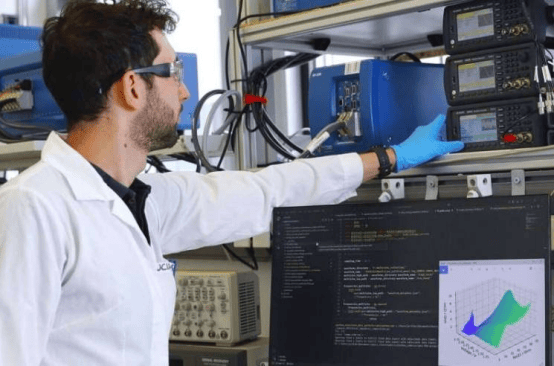
Collecting all the necessary data requires time-consuming measurement and analysis methods. In addition, until now, impedance measurements could only be performed in a static state. Typically, it takes up to 20 minutes to obtain the data needed to characterize the battery.
Under the leadership of Fabio La Mantia, researchers at Fraunhofer IFAM have further developed this method. Now, dynamic impedance spectroscopy technology is able for the first time to calculate state measurements of the battery during operation and provide data in real time.
The information obtained in this way goes far beyond simple charging capacity or remaining operating time data. It can provide a detailed, accurate, and in-depth description of the battery's internal state. This also allows us to predict the potential lifespan of individual battery cells.
Although existing battery charge state indicators (for example, those integrated into the on-board electronics of electric vehicles) also perform continuous measurements during use, they provide less information, respond more slowly, and are less accurate.
"First of all, dynamic impedance spectroscopy technology opens up new possibilities for optimizing battery management, thereby extending battery service life. It also paves the way for the application of these batteries in safety-critical applications," explained project leader Hermann Pleteit.
High-Resolution Measurement Method and Direct Analysis
In this innovative method, the discharge or charge current is superimposed with a multi-frequency test signal. Different frequencies allow inference of the state of certain components or processes inside the battery. The response signals of current and voltage are measured up to one million times per second. All data from the high-resolution measurement method flows into a simultaneously running data processing system. Software programs use this information to calculate the evolution of impedance values and then infer the state of the relevant battery cell.
To obtain results in real time despite the massive amount of data generated by high-resolution measurements, the Fraunhofer researchers designed another clever trick. "We developed algorithms that can significantly reduce the amount of data before analysis without losing relevant information," said Pleteit. Consistent with these advances, real-time control of various aspects of battery state via impedance spectroscopy offers significant advantages.
Quickly Shut Down Overheating Batteries
For example, the battery management system can use impedance data to immediately record local overheating of a certain battery cell during driving. The system then directly shuts down that battery cell or reduces power. This eliminates the need for traditional temperature sensors, which are usually placed outside the battery cell and therefore record thermal problems with a delay. By then, it is often too late to prevent damage to the battery cell.
Electric vehicle chargers also benefit. For example, the technology can be used to decide whether to choose ultra-fast charging or slower charging that reduces battery wear. During short stops at rest areas, the battery management system quickly charges the battery while ensuring that no dangerous temperature peaks occur and that internal components are not subjected to excessive stress. If the vehicle is plugged into the charger for several hours, the management system charges the battery at a slower rate to reduce wear and extend battery life.
Renewable Energy and Aviation Applications
Suppliers of renewable energy such as wind or photovoltaic power need energy storage to compensate for fluctuations in electricity production. With Fraunhofer technology, they can obtain stable battery module systems that can be controlled at any time.
Real-time monitoring of battery state even promises applications in future safety-critical scenarios. "For example, such systems could be used in environmentally friendly electric aircraft. This market is still in its infancy. The shipping industry has also shown strong interest in this technology," said Pleteit.
Impedance spectroscopy is not only suitable for the currently common lithium-ion batteries but can also be applied to solid-state batteries, sodium-ion batteries, lithium-sulfur batteries, or any other future technologies.