
A research team led by Professor Sophie Janssens from the VIB-UGent Center for Inflammation Research in Belgium has published a study in Cell Reports, revealing the specific immune response mechanism of dendritic cells to lipid nanoparticles (LNPs). This discovery provides a theoretical basis for the development of more precise and safer next-generation vaccines.
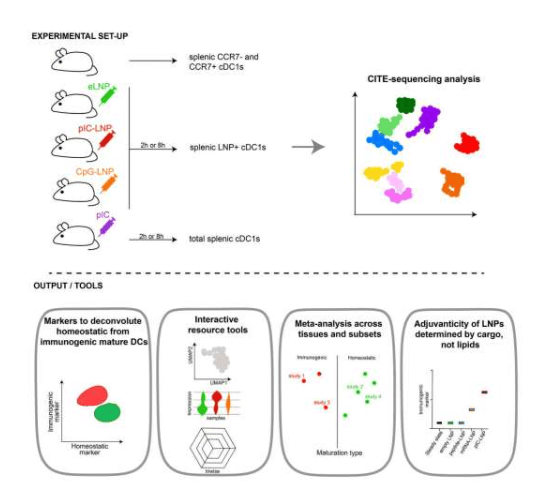
Using single-cell analysis techniques such as CITE-seq and flow cytometry, the research team found that empty LNPs do not strongly activate the immune system, while LNPs carrying mRNA antigens can prompt dendritic cells to exert immunogenic effects and activate T cells to generate protective immunity. In contrast, empty LNPs or LNPs carrying peptide segments tend to maintain immune homeostasis. First author of the study Dr. Sofie Rennen stated: "By selecting delivery components, we can specifically guide the direction of the immune response."
Co-first author Dr. Victor Bosteels pointed out that this discovery may provide a new pathway for the development of therapeutic vaccines for autoimmune diseases. Professor Janssens summarized: "Mapping the response profile of dendritic cells to vaccine components helps to target the immune system more precisely and safely."
The study was completed in collaboration with Ghent University, the VIB Single-Cell Core, and the Université Libre de Bruxelles, providing cellular-level theoretical support for vaccine design.