
In the real world, higher-order interactions are ubiquitous, reflecting complex relational networks. However, due to technical limitations, many fields can only capture low-order pairwise interaction information. This leads to a lack of understanding of the complete interaction context and constrains the development of applications in related fields. To address this challenge, Professor Kijung Shin's team at the Korea Advanced Institute of Science and Technology (KAIST) has successfully developed an artificial intelligence model named "MARIOH" (Multiplicity-Aware Reconstruction of Higher-order Interactions). This model can accurately reconstruct higher-order interactions from low-order interaction information, bringing new analytical perspectives to fields such as social network analysis, neuroscience, and life sciences.
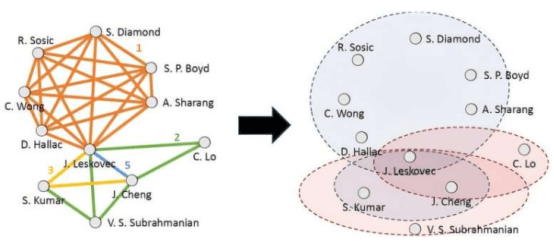
Reconstructing higher-order interactions is difficult because a large number of potential higher-order interactions may originate from the same low-order structures. The core innovation of the MARIOH model lies in its effective use of multiplicity information from low-order interactions to significantly reduce the number of higher-order interaction candidates that may arise from a given structure. At the same time, with the help of an efficient search algorithm, MARIOH can quickly screen out promising interaction candidates and accurately evaluate the probability that each candidate represents a real higher-order interaction through multiplicity-aware deep learning techniques.
The research team validated the excellent performance of the MARIOH model through testing on ten real-world datasets. The results show that compared with existing methods, MARIOH improves the accuracy of higher-order interaction reconstruction by 74%. In particular, on co-authorship datasets, MARIOH achieved an accuracy of up to 98%, far exceeding the 86% of existing methods. In addition, using the reconstructed higher-order structures can significantly improve the performance of downstream tasks such as prediction and classification.
Professor Kijung Shin said: "The MARIOH model breaks through the limitation of existing methods that only rely on simplified connection information, enabling more accurate parsing of complex interconnected relationships in the real world." He also pointed out that MARIOH demonstrates broad application potential in multiple fields such as social network analysis, life sciences, and neuroscience.
This research was jointly completed by Kyuhan Lee, Geon Lee, and Professor Kijung Shin. The research results were presented at the 41st IEEE International Conference on Data Engineering held in Hong Kong in May this year.