
In Canada, construction activities are frequent — whether repairing sidewalks and streets or building new houses and apartments, cement, as a key component of concrete, is used in large quantities. However, cement production comes with significant environmental costs, accounting for 8% to 10% of global greenhouse gas emissions.
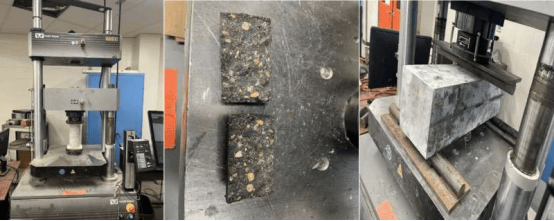
To make cement production more environmentally friendly, a team from the College of Engineering at the University of Saskatchewan has conducted research exploring the feasibility of replacing part of the cement used in concrete production with biochar. Biochar is a carbon-rich fine powder produced by burning plant waste (biomass) in a low-oxygen environment. PhD student Ravi Patel from the team explained that they used non-edible components such as flax or wheat straw, which are typically left in the fields as agricultural waste.
Patel and his colleagues were curious about how replacing cement with biochar would affect the durability of concrete. Replacing cement with biochar not only reduces cement usage but also sequesters carbon from plant material. To investigate this, the researchers added varying amounts of biochar to cement mixtures and studied each sample. They first observed how the samples performed under real-world concrete wear conditions, then took the samples to the Canadian Light Source (a national research facility at the University of Saskatchewan) for detailed analysis of the internal structure of the concrete.
The research results showed that samples containing biochar were stronger and had lower porosity than samples with higher cement content. The related study was published in the journal Scientific Reports.
Next, the research team will evaluate the long-term performance of biochar-enhanced concrete. Patel noted that they had previously tested the new concrete formulations for up to 56 days, but it is necessary to check the concrete strength after one or two years, as building structures have service lives of 50, 60, or even 70 years. Understanding the long-term performance of biochar in improving concrete strength is essential.
If the project succeeds, it could bring multiple improvements to the construction industry: concrete production will become more environmentally friendly, agricultural waste that would otherwise be landfilled can be utilized, and it may help extend the service life of concrete. Patel said that as researchers, they hope to give back to society and the environment, and achieving positive results can contribute to addressing climate change.