
Scientists at Oregon State University have developed a new metal-organic framework material that has the potential to reduce the reliance of lighting and display technologies on rare earth metals. The research team, led by Associate Professor Kyriakos Stylianou from the Department of Chemistry, including graduate students Kyle Smith and Ankit Yadav, published the findings in the journal Nature Communications.
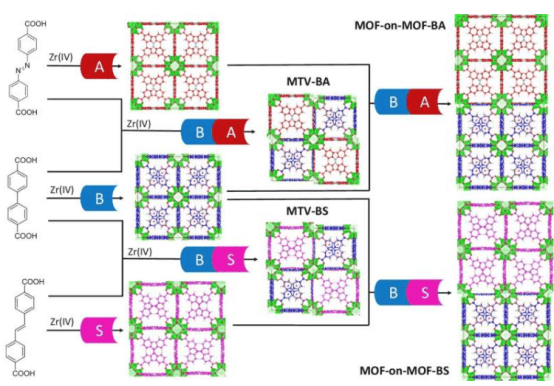
Metal-organic framework materials are porous crystalline materials composed of metal ions and organic linker molecules. The research team innovatively adopted a "MOF-on-MOF" stacking structure, combining two different types of porous crystals, achieving a luminescence efficiency four times higher than that of traditional metal-organic framework materials. Stylianou said: "By controlling the interactions between the components, we discovered how to reduce energy losses that typically limit the brightness of these materials. Higher efficiency means that future LEDs can produce the same amount of light while consuming less electricity."
This research is of great significance for reducing energy consumption. Currently, lighting and display systems in the United States consume approximately 213 billion kilowatt-hours of electricity annually, and 13% of global carbon dioxide emissions come from the related energy use. The new metal-organic framework material can replace rare earth metals such as europium and terbium currently in use. These materials are not only expensive, but their mining and processing processes also have significant environmental impacts.
The researchers noted that this new luminescent material can simultaneously reduce production costs, ecological impact, and energy consumption. The tunable properties of metal-organic framework materials provide a new pathway for designing energy-efficient lighting systems. This technology can also provide an alternative to rare earth supply chains affected by geopolitical factors, offering significant economic and environmental benefits.
Stylianou added: "We urgently need advanced and efficient luminescent materials, and we believe our new metal-organic framework material can help meet this demand. We see tremendous potential in their economic, environmental, and climate impacts." This research lays the foundation for developing more sustainable lighting and display technologies.