
A research team from Lund University in Sweden has published its latest findings in the journal Immunity, successfully identifying transcription factor combinations that can reprogram ordinary cells into specific dendritic cell subtypes. This discovery provides a new technical pathway for developing precision cancer immunotherapy strategies.
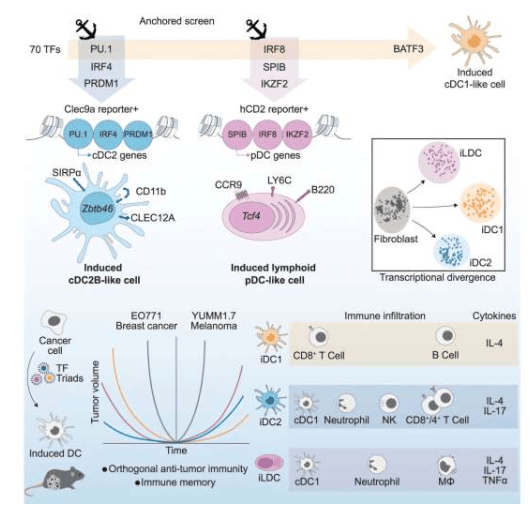
The researchers systematically tested 70 transcription factors and identified two specific combinations of three key factors capable of converting skin cells or cancer cells into functional dendritic cells. Professor of Molecular Medicine Filipe Pereira stated: "Through cell reprogramming technology, we confirmed that two specific factor combinations can respectively construct conventional type 2 dendritic cells and plasmacytoid dendritic cells." Experimental data showed that these engineered dendritic cells can trigger specific immune responses against melanoma and breast cancer in mouse models.
This study is the first to map a systematic blueprint of dendritic cell development, revealing the key mechanisms by which transcription factors open different regions of the genome during the early stages of reprogramming. The research found that different factor combinations determine the fate of cells differentiating into various dendritic cell subtypes by activating specific gene expression pathways. This cell reprogramming technology is expected to address the challenge of insufficient patient response rates in current immunotherapy.
The researchers noted that this technology platform is not only applicable to cancer treatment but may also be extended to the field of autoimmune diseases. Reprogramming to produce dendritic cell subtypes with anti-inflammatory properties could provide new solutions for treating diseases caused by overactivation of the immune system. The study is currently still in the experimental stage, and clinical translation research will be carried out in the future.